Google Health’s: The Master of Context and Your Early Warning System

Please review my blog disclaimers and disclosures

Transparency & Context: My Beta Experience

  • Note on Personalization: Screenshots are from my real-world testing of the Google Health (formerly Fitbit) “Coach” during its beta rollout. These represent a highly personalized conversation. Because I have been “talking” with Gemini for a long time (in Google and in FitBit Pro), the AI has a longitudinal understanding of my specific medical roadmap—including things like my C5-7 disc replacement and chronic pacing goals.
  • No Guarantee of Results: Each user may have a different initial experience or conversation flow. Like any “learning partner,” the depth of the insights often depends on the context you provide over time.
  • Beta & Evolving Features: These visuals are part of the Fitbit Labs “Public Preview”. Features like “Unusual Trends” detection are currently in testing and may change or evolve over time.
  • Standard Safety Reminder: AI responses may contain mistakes and are not for medical advice. Always consult your healthcare team for clinical decisions.

Let’s talk about the Google Health Rollout that began May 19, 2026! I have been participating in the beta for FitBit Pro users, and I must say, I am impressed!

(It won’t replace Guava Health for me, but it is a wonderful addition.)

Have you ever walked into a follow-up appointment, described a new and terrifying symptom, only to be told it’s “just part of the healing process” or “normal”? When a provider dismisses your symptoms, they are often guessing and comparing your body to a textbook average. To get them to move from guessing to investigating, you need objective data.

TANGENT: If you find this interesting, check out the Words have Weight Series that I’m posting!

Walking into a clinic with your biometric data (including trends noted by your wearables) helps to change the dynamic: you are comparing you to YOU. Turning personal data into clinical leverage is the ultimate evolution of patient advocacy.

Google Health’s major platform rollout gives patients with chronic conditions a new set of tools to add to their baseline strategy. Here are some ways you can use this rollout to audit your care and bring the facts to your next appointment.


Master of Context and an Early Warning System

The new Google Health platform brings a clinical-grade environment directly to your phone. Google Health Premium (formerly FitBit Health Pro) serves as the home for the platform’s full Health Coach features.

Google Health is designed specifically to be the Master of Context. The mobile AI “Coach” can provide an “Early Warning System” for your day-to-day well-being:

  • The Coach is built to “talk” directly to you, your live wearable data, tracking key metrics like Heart Rate Variability (HRV), Resting Heart Rate (RHR), and Breathing Rate.
  • By continuously analyzing these metrics, the AI can pick up on subtle physiological shifts before you even consciously feel sick, helping you spot trends.
  • The conversational interface makes it excellent for quick, on-the-go checks to evaluate the potential impacts of medications, treatments, or even review that “something is off with my body” feeling.
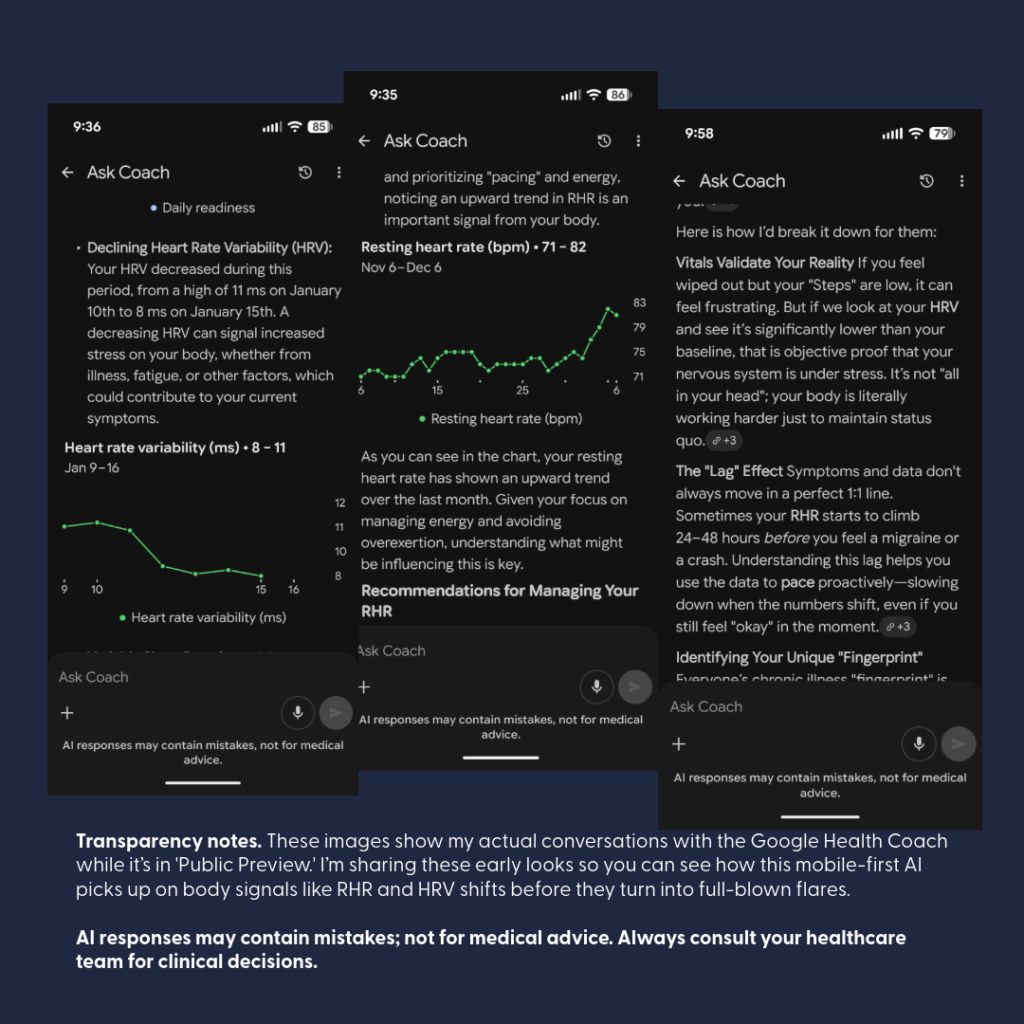
Screenshots of the Google Health Coach app showing biometric data trends. Charts illustrate a declining Heart Rate Variability and rising Resting Heart Rate. Text labels describe these as "Vitals Validate Your Reality" and the "Lag Effect," explaining how data can predict a health flare before it is felt physically.
Physical Health Shifts Including Infections. Often physical infection stress shows up in your “data” long before you can articulate it to a doctor. Passive wearable algorithms can catch structural emergencies early—like triggering an alert for sustained resting tachycardia (lasting over 20 minutes) or alerting patients to AFib.

The AI Coach in Google Health can take those raw metrics a step further: it can actively recognize the metrics outside YOUR normal (e.g., resting heart rate increase). Increased resting HR can be associated with autonomic imbalance (Borhani et al., 2025), illness (Michard & Saugel, 2025), and as a key metric for remote arrhythmia management (Jena et al., 2025).

In my case, “Coach” recognized something was off as shown above – and what was off – well I had a kidney stone occluding the lower pole of a ureter. (Complete duplication of my ureters bilaterally … is interesting.)
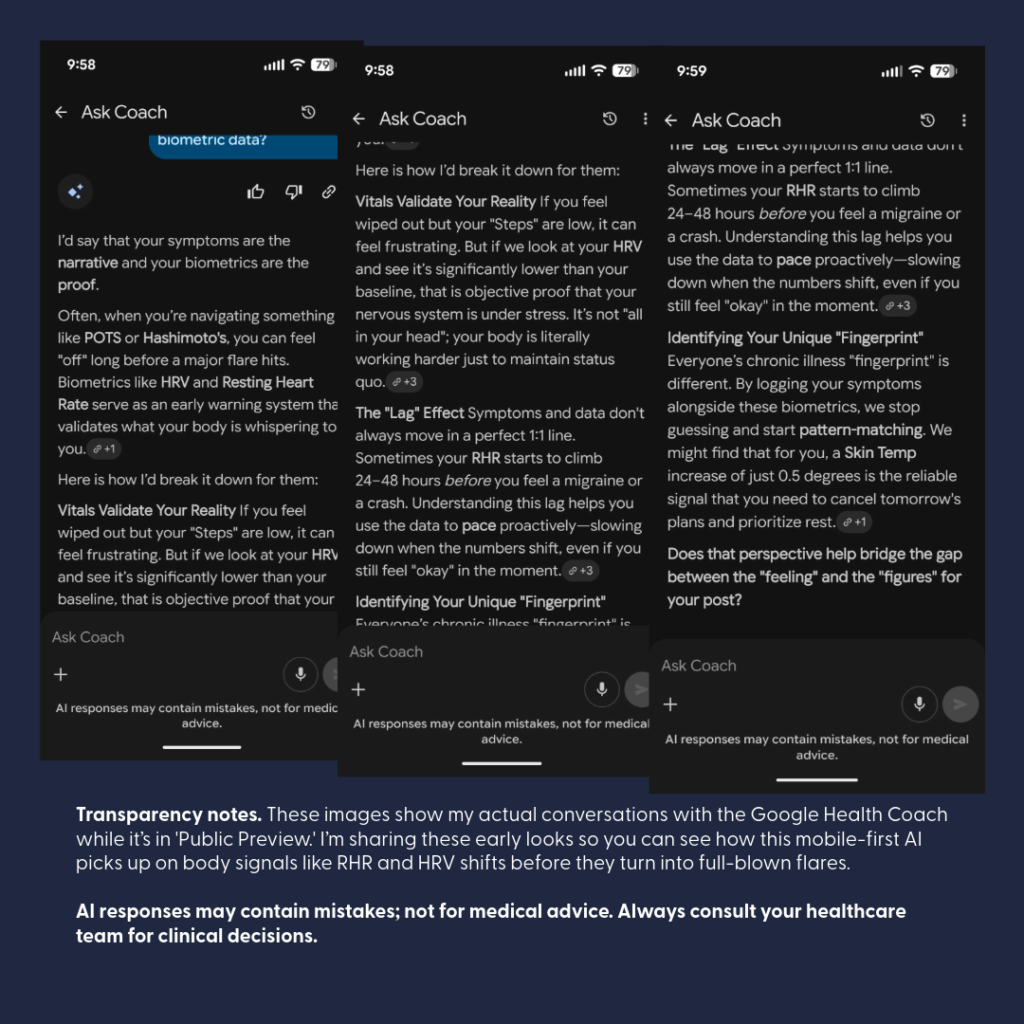
Smartphone screenshots of the Google Health Coach app explaining the "Lag Effect." The text describes how Resting Heart Rate (RHR) often climbs 24-48 hours before a migraine or crash occurs. It positions biometrics as the "objective proof" for chronic illnesses like POTS or Hashimoto’s, validating physical stress even when a patient still feels "okay" in the moment.
Vitals Validate Your Reality.
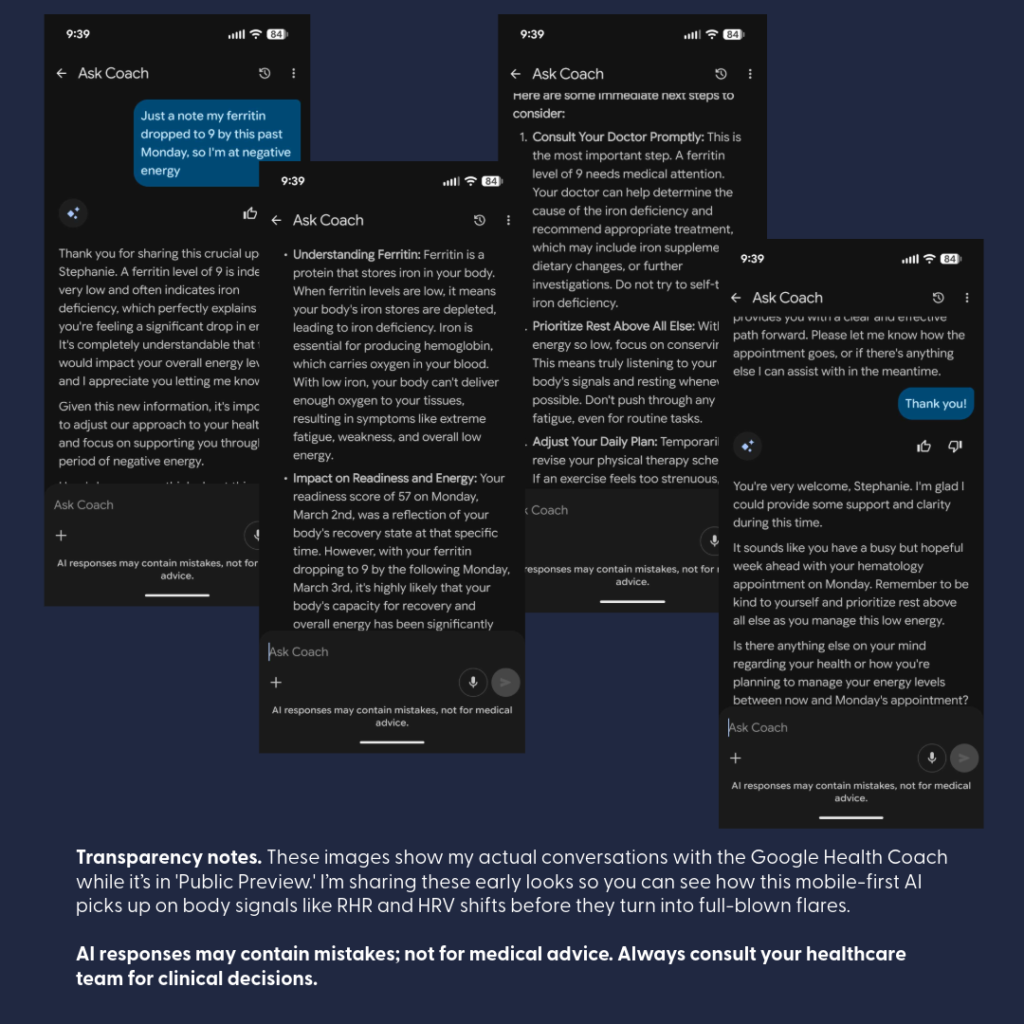
Screenshots of a discussion with the Google Health Coach regarding a drop in ferritin levels to 9. The AI explains that low ferritin leads to iron deficiency and extreme fatigue by preventing oxygen delivery to tissues. It provides immediate next steps, including consulting a doctor, prioritizing rest, and adjusting physical therapy schedules to conserve energy.
Navigating Pitfalls, Pivots, and Trajectories. During medical treatments—like managing severe iron deficiency when your Ferritin drops to a critical 9—the Coach acts as an interactive sounding board to map out symptom strategies – and to understand the labs. It also tracks your data during the intervention.

When undergoing back-to-back iron infusions, the Coach can catch delayed shifts in your biometric data indicating an “adverse reaction” to a medication (i.e., Your body and the medication – didn’t get along).

Having that data readily available allows you to make safe, immediate adjustments with your care team to swap out the problematic medication before your next round, while the Coach continues chatting through your follow-up to monitor your recovery trajectory.

Externalizing Medical Memory

When you’re dealing with chronic illness or a sudden flare, your brain is already working overtime just to handle the pain and exhaustion. Expecting yourself to remember every single detail about when a symptom started or how your heart rate shifted is like trying to run a marathon while carrying a heavy suitcase.

Using a tool like Google Health isn’t about being ‘anxious’—it’s about being smart. It’s like having a backup drive for your brain. You let the app handle the heavy lifting of storing the data so you can save your limited energy—your ‘spoons’—for actually getting through the day and focusing on your recovery.

Offloading data recall to Coach can help you save your energy for the actual clinical conversation. This can help you present objective shifts in your objective data (i.e., biometrics).
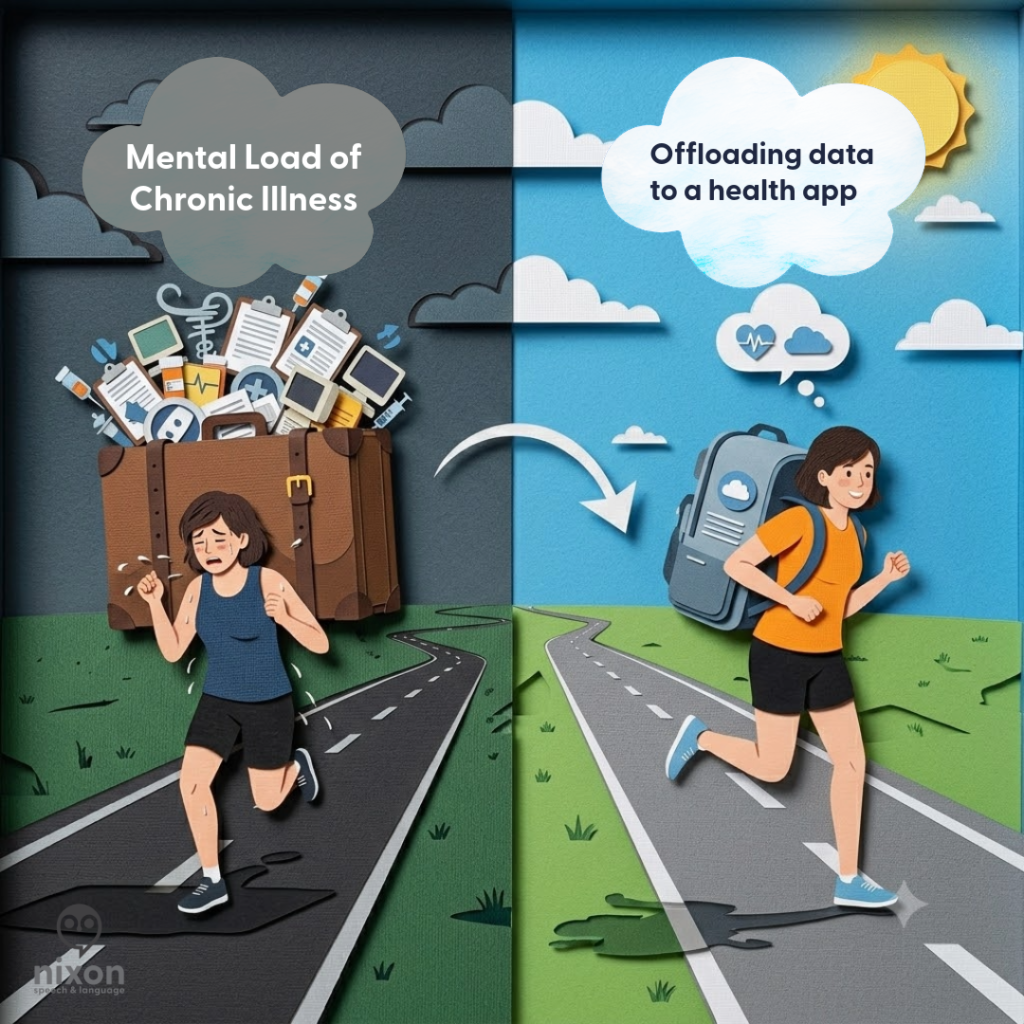
A paper cutout-style infographic depicting a female runner facing forward. On the left side, representing the 'spoon-heavy' way, she is struggling to run a marathon while carrying a heavy, oversized suitcase that symbolizes the mental burden of tracking symptoms and timelines. On the right side, representing the 'sustainable' way, the runner has set the suitcase down and is running freely. The infographic visually represents how using Google Health as a secure data buffer allows patients to offload the mental task of data storage, saving their 'spoons' and energy for recovery.
Image in part created using Gemini (Google’s AI) with some modifications by Stephanie M. Nixon.

The Gemini integration inside the Google Health Coach changes how you interact with your health metrics. Instead scrolling through a list, the Coach synthesizes complex data into clear, plain-language summaries. This can be a relief for patients who feel completely overwhelmed by the “alphabet soup” of data during a physical flare.

Conversational Symptom Logging

As a Guava Health User, I am used to a symptom-tracking checklist that leads to “insights” paired with biometric data. So switching to indirect symptom logs that came out of my conversations with the AI Coach was initially uncomfortable to me.

If you want a rigid, heavily itemized manual symptom-tracking checklist, Google Health’s baseline menus leave a bit to be desired. There is an “other” section, but it isn’t extensive, and it won’t replace the deep, structured manual entry interfaces found in heavy lifters like Guava.

But here is the magic: it completely flips the script by tracking your symptoms through fluid conversation instead. The Coach is incredibly aware of your specific, ongoing body context—for instance, it remembers and keeps tabs on a stubborn ankle injury. Instead of forcing you to click through endless checkboxes and dropdown menus when you are low on “spoons,” you simply talk to the Coach about how you are feeling, and it handles the tracking dynamically within your chat history.
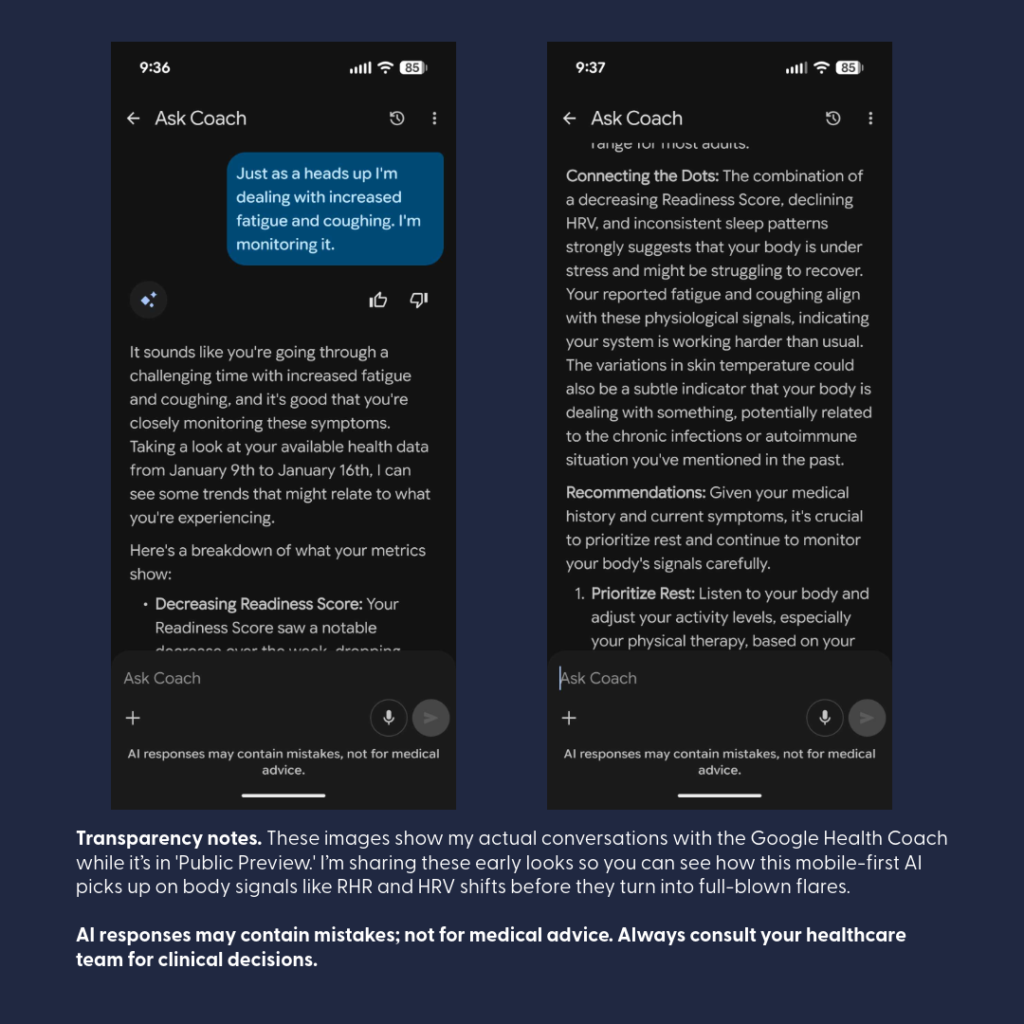
A conversation with the Google Health Coach where the user reports increased fatigue and coughing. The AI synthesizes data from Jan 09 to Jan 16, noting a decreasing Readiness Score, declining HRV, and inconsistent sleep. The coach "connects the dots," suggesting these physiological signals indicate the body is struggling to recover and advises prioritizing rest.
Providing guidance: Reviewing symptoms when a shift is noted in the biometrics, can help tie the information together.

The Longitudinal Brain: Memory Across Threads

Traditional AI tools often suffer from “amnesia,” resetting entirely every time you open a new window. Because Google Health Coach archives core context into persistent memory logs, it builds an ongoing longitudinal understanding of your medical roadmap.

For example, if you discuss a scheduled spinal fusion that gets pushed back due to sudden low Ferritin, the Coach remembers that timeline.

Weeks later, when you open an entirely separate chat session to ask about an isolated biomarker, the AI doesn’t start from scratch—it remembers your overarching journey, bridges the gap between different conversation loops, and actively checks back in on how you’re feeling ahead of the rescheduled surgery. It behaves like a true, long-term cognitive partner rather than a temporary chatbot.

Strict Privacy Guardrails & Clinical Security

Moving your health metrics into a consumer app understandably raises questions about data security. To address this, Google has implemented rigorous technical, administrative, and physical safeguards to ensure this environment meets strict HIPAA (Health Insurance Portability and Accountability Act) standards for storing and transmitting medical records.

Here are the strict guardrails established for the Google Health app rollout:

  • Complete Data Separation: Your clinical and wearable health profiles are kept in strict privacy silos, entirely separated from other consumer services like your Google Search history or YouTube recommendations.
  • No Ad Targeting or Data Selling: Google has committed to a strict guardrail: your personal health records, diagnoses, and daily biometric data are never sold to third parties and will never be used to target Google Ads.
  • Legal Accountability (BAAs): Google Cloud and its health services support compliance through formal Business Associate Agreements (BAAs)—formal contracts that hold the platform legally accountable for protecting your private health information.
  • Total Patient Control: You retain full ownership of your profile. You choose exactly which health portals to connect, and you have the power to revoke that access at any moment.
  • Granular Location Protections: For privacy-conscious or neurodivergent users, GPS tracking is strictly opt-in. Location data is primarily used to track distance and pace for specific outdoor activities, and permissions can be disabled at any device or app level at any time.
  • De-Identified Research: Participating in health research is completely voluntary and never automatic. Before any data is utilized, it undergoes strict de-identification protocols to remove personal identifiers (like names or emails) and is aggregated with data from thousands of others to study broad public health trends.

The “Spoon-Level” Google Health Strategy

When your energy is limited, preparing for a medical visit shouldn’t waste your precious “spoons”. You can easily adapt your use of Google Health to match your capacity on the day of your appointment:

  • The Medium-Energy Strategy (🥄🥄): Open your mobile app and ask the Google Health Coach to generate a summary of your recent biometric shifts.
  • The Outcome: Print out the AI-generated summary to serve as an instant, objective “talking points” script. This ensures your most critical concerns are accurately addressed even if you hit a wall of brain fog or pain in the exam room.
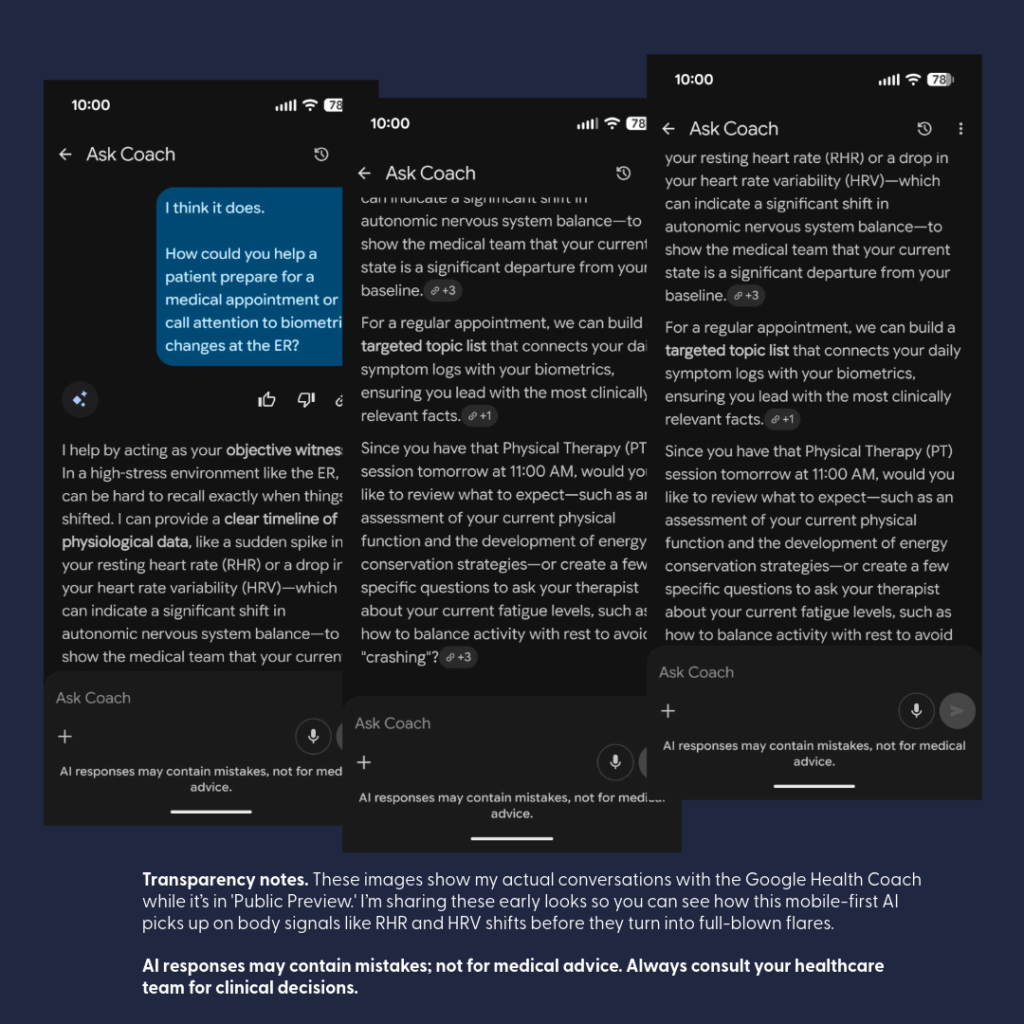
A graphic on a dark blue background featuring three overlapping mobile phone screen mockups. The screens show a text conversation with Google Health's "Ask Coach" AI in dark mode. The user asks how the coach can help a patient prepare for a medical appointment or an ER visit. The AI response describes itself as an "objective witness" that provides a clear timeline of physiological data, flags spikes in resting heart rate (RHR) or drops in heart rate variability (HRV), and creates targeted topic lists for upcoming appointments. Below the screens, white text provides a transparency note explaining that these are actual public preview conversations showing how the mobile-first AI picks up on body signals before flares, followed by a standard medical disclaimer.
Some of the ways Google Health can help with appointment prep take my app during the beta test.

The Bottom Line

Using an app to monitor your physiological baselines and symptom clusters isn’t a temporary tech trend—it is a necessary act of accessibility for patients navigating complex conditions.

You are not “obsessing” over your health; you are actively partnering in your care.

Utilizing these clinical-grade tools ensures that your medical chart reflects your true physical reality, forcing providers to move past standard labels and look directly at the facts.


Disclaimer: This post is for educational and patient advocacy purposes only. All product names, logos, and brands are property of their respective owners. “Google Health” and “Fitbit” are trademarks of their respective holders. Use of them does not imply any affiliation with, endorsement by, or sponsorship by them.

Citations

Borhani, S., et al. (2025). Automatic detection of persistent physiological changes after COVID infection via wearable devices with potential for long COVID management. Scientific Reports.

Michard, F., & Saugel, B. (2025). New sensors for the early detection of clinical deterioration. Reviews in Cardiovascular Medicine.

Jena, N., et al. (2025). Wearable Technology in Cardiology: Advancements, Applications, and Future Prospects. Reviews in Cardiovascular Medicine.

Access and advocacy, AI for health, chronic illness, google health, patient advocacy in healthcare, wearable technology


A highly conceptual graphic of an open, ancient-style lore book resting on a clipboard labeled 'Provider's Note.' The pages blend medical anatomical drawings of eyes and joints with mythical text titled 'Sagas of Patients' and 'Words Have Weight,' challenging the use of subjective language in medical charting.

Words Have Weight: The “Saga” of Subjective Charting

Part 2B: Provider Track – Liability of the Filter

Personal Narrative & Data Integrity:

  • Designated Record Set: This series represents a personal, professional audit of my own legally obtained medical history and “Designated Record Set”.
  • Factual Basis: All clinical data points—including the 169.4-minute gastric emptying result —are pulled directly from my documented clinical records.
  • Advocacy Intent: My goal is to highlight systemic disparities in medical documentation and foster better clinical communication.
  • Non-Defamation: This audit is a critique of the content and quality of documentation and the patterns of clinical bias, rather than an attack on specific individuals or institutions.

A Note on Neurodivergent Baseline:

Contextual Accuracy: Observations regarding communication style, energy, or behavior (often labeled “manic” or “pressured” in my records) must be viewed through the lens of my documented, lifelong ADHD diagnosis.

A ‘u’ was added (AuDHD) as a late diagnosis a few years ago providing a key to understanding why so many providers saw ‘manic’ behavior where there was actually just a neurodivergent person managing a health emergency. We have to stop labeling what we don’t understand.


Clinical documentation is a legal and clinical record. It should describe findings, reasoning, function, and uncertainty—not turn subjective impressions into a durable patient identity.

When providers prioritize narrative shorthand over objective data, the consequences extend beyond patient frustration. Subjective charting can bias future providers, delay appropriate workup, and create significant medicolegal risk.

The Choice: A Thread or a Relationship?

In a research study by Melanie Sloan and colleagues¹, one patient described her medical record as:

“A deranged Twitter feed… creating a completely unrecognizable image of me as a patient and a person.”²

As a provider, you have a choice:

  • The “Deranged Twitter Feed”: Do you want to be just another reactionary post in a chaotic thread of subjective dismissals?
  • The Anchor of Trust: Or do you want to be the provider they respect—the one who actually listens and anchors the record in data?

If you entered medicine for an ego trip or to exert power, there is no point in reading further. But if you are here to help, then I am asking you—as both a provider and a patient—to LISTEN.


The Contrast: Storytelling vs. Clinical Data

When you read a previous provider’s note describing a complex illness as a “saga,” it creates a powerful cognitive bias. It can cause you to actively ignore objective data sitting right in the chart.

Case Study: The “Histrionic” Filter vs. The Objective Truth

Consider one of my ER visits. Likely primed by a previous provider’s “saga” label, the clinician documented: “There is a histrionic component to her presentation.”

What the clinician ignored to maintain their narrative:

  • Hypovolemic Shock: My blood pressure was 80/51, requiring 39 minutes of critical care.
  • Inflammatory Markers: A WBC of 14.3, Neutrophils: 84.4%, Lymphocytes: 8.3%.
  • Radiographic Evidence: A High-Resolution Chest CT finalized one week prior explicitly documented “tree-in-bud nodularity,” the radiographic hallmark of small airway mucus plugging and infection.

When you allow a biased adjective to anchor your judgment, you write a psychiatric label on a patient whose complaint is legitimate and objectively noted in labs and imaging. And you become another domino falling in the chain all because you didn’t review all the data or allowed your diagnosis and assumptions to be guided by others. This is an indefensible medicolegal liability.

A woman holding up a stack of medical file folders, serving as the featured banner image for the Words Have Weight blog post on patient record advocacy.
Designed by Nixon Speech and Language LLC

Clinician Associated Trauma (CAT) is Real

Clinician Associated Trauma is the cumulative psychological harm caused by repeated medical gaslighting and biased charting.

  • The “Organization” Trap: I provided a chronological timeline of my worsening cough in hopes they would understand, only to have it called a saga. I spent the past 5 years trying to better organize my history, only to have it referred to as “30 pages of notes”.  
  • The Identity Error: When Precision Fails

In January 2020, a resident referred to my three-month medical crisis as a “saga” while incorrectly identifying me as “Ms. Dixon”. Most notably, the attending physician then signed off on this report, attesting that they “reviewed the resident’s note and agree with the history” .

In educational settings, using the wrong name on a child’s report would likely render the document invalid. In medicine, however, we allow a senior clinical supervisor to “verify” an error-ridden note, giving subjective character assessments the weight of permanent clinical truth. If a provider isn’t precise enough to get your name right, they aren’t precise enough to label your experience.

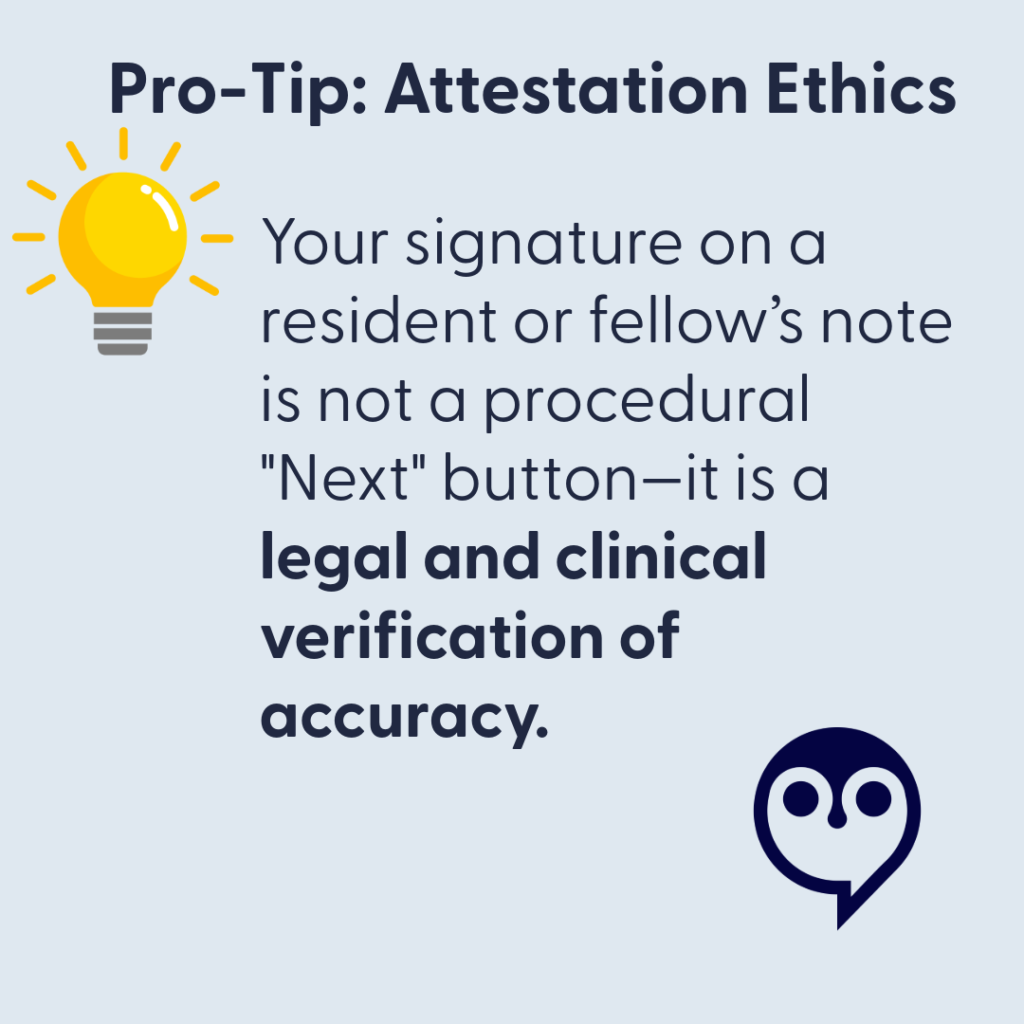
    Pro-Tip: Attestation Ethics.  Your signature on a resident or fellow's note is not a procedural "Next".  It is legal and clinical verification of accuracy.
    • The “Rubber Stamp” Risk: When you sign an attestation for a note containing an incorrect patient name or biased labels like “saga,” you are professionally validating a “deranged twitter feed” entry.
    • The Transparency Reality: Under the 21st Century Cures Act, patients see your attestation immediately. If you are too rushed to catch a wrong name, the patient (and the law) will assume you were too rushed to perform a rigorous clinical review.
    • The Clinical Standard: If a document’s basic identifiers are wrong, its clinical conclusions are suspect. Use your edit window to ensure the final record reflects the objective truth, not a “rubber-stamped” narrative.

    Technical Stewardship: Closing the Gap

    Longitudinal aggregation is the best defense against fragmented care.

    • Guava Health: Allows providers to reconcile conflicting documentation and see the “receipts”—like a 169.4-minute gastric half-time—before a subjective bias can take root.
    • Google Workspace + BAA: Provides secure, HIPAA-compliant infrastructure to handle high-stakes documentation.

    The Correction as a Collaboration

    Under the 21st Century Cures Act, the wall between the patient and the record has been removed. If an error exists, they will see it.

    • Acknowledge the Discrepancy: Respond with empathy: “I am sorry there are discrepancies… I am on your side!”, but mean it.
    • Avoid Blaming the Patient: Even if the patient had a chance to review whatever the documentation, it isn’t their fault the chart is wrong. That’s the provider’s job.
    • Update the Record: Whether through an addendum or voiding a note, ensure the final record reflects the functional and physiological truth.

    Humanity Over Perfection: The Due Diligence Standard

    We are all human. Patients don’t expect their providers to be perfect; they expect them to do their due diligence .

    Mistakes happen—a wrong name, a misinterpreted symptom, a “rubber-stamped” attestation . But the difference between a “mistake” and “Clinician Associated Trauma” is the willingness to be honest when your own “spoons” (capacity/energy) are lacking.

    The “Honest Pivot” Script

    If you are overwhelmed, behind schedule, or hit a wall with a complex case, don’t reach for a “saga” label to end the visit. Try radical honesty instead:

    “I want to be fully present for this conversation, and I know you took the time to come in today. Honestly, my capacity is low right now, and I want to give your data the deep thought it deserves. Can I review your records this week and follow up with a call or a telehealth visit in 10 days to discuss my findings?”

    Why This Pivot Saves the Relationship:

    • It Models Respect: You are acknowledging that the patient’s time and data are valuable.
    • It Prevents Bias: By pausing instead of rushing, you avoid making the “snap judgments” that lead to “histrionic” labels or identity errors.
    • It Shifts the Dynamic: You are no longer the “gatekeeper” with all the answers; you are a partner performing an audit.

    The Provider Challenge: The Mirror Test

    • Stay in Scope: If you are not a psychiatrist, do not reach for labels like “pressured speech” to pathologize a communication style. Investigate neuro-informed baselines (AuDHD) or physiological distress first. As I said in Part 1 – there are many reasons a person might speak with a fast rate beyond anxiety (and they aren’t zebra reasons…).
    • Document Uncertainty, Not Assumptions: Do not use psychiatric labels as a “wastebasket” for difficult diagnostics. Similarly, ask yourself … why is this patient bringing 30 pages of “hand-typed notes” to my appointment?

    Sometimes…the answer is as simple as the patient doesn’t want to forget the name of the 12 medications or…the patient’s hand cramps writing on your background history forms, so they have it available to print for providers.  And other times…their history is just that long. 

    Don’t assume their physical symptoms are anxiety – some of us blank when people ask questions, that doesn’t mean it’s somatization or anxiety.

    • Audit Your Adjectives: Adjectives that frame symptoms as a performance (“claims,” “dramatic,” “demonstrates”) transmit bias to every clinician who follows.
    • Document Function, Not Assumptions: I was an SLP unable to work for 3 weeks due to a vocal fold ulceration, yet a provider wrote my disability “surpassed objective findings”. Document the loss of function, not your “impression

    The Bottom Line: Be the Partner, Not the Domino

    A corrected chart or a thoughtful follow-up isn’t a sign of weakness; it is a higher standard of Clinical Data Stewardship. It protects you from medicolegal liability and ensures that every future provider sees a clear, objective physiological truth—not a “deranged twitter feed” of biased shorthand.

    If you became a provider because you want to help, then be the one who keeps the dominos standing.

    Bottom Line: A corrected chart isn’t just a win for the patient; it is a higher standard of Clinical Data Stewardship that protects you and ensures every future provider sees the truth, not a “saga”.


    References

    1. Sloan, M., Naughton, F., Harwood, R., Lever, E., D’Cruz, D., Sutton, S., Walia, C., Howard, P., & Gordon, C. (2020). Is it me? The impact of patient-physician interactions on lupus patients’ psychological well-being, cognition and health-care-seeking behaviour. Rheumatology Advances in Practice, 4(2), rkaa037. https://doi.org/10.1093/rap/rkaa037 
    2. Sloan, M., Bosley, M., Gordon, C., et al. (2025). “‘I still can’t forget those words’: mixed methods study of the persisting impact on patients reporting psychosomatic and psychiatric misdiagnoses.” Rheumatology. doi: 10.1093/rheumatology/keaf115. PMID: 40037287; PMCID: PMC12107051
    3. Davis, B. (2021). “Derogatory Language in Charting: The Domino Effect.” Patient Safety Network. https://patientsafetyj.com/article/73542-derogatory-language-in-charting-the-domino-effect 
    4. Goddu, A. P., O’Conor, K. J., Lanzkron, S., et al. (2018). “Do Words Matter? Stigmatizing Language and the Transmission of Bias in the Medical Record.” Journal of General Internal Medicine, 33(5), 685–691. doi: 10.1007/s11606-018-4583-7. PMID: 29374357; PMCID: PMC5910343.
    5. Park, J., Saha, S., Chee, B., Taylor, J., & Beach, M. C. (2021). “Physician Use of Stigmatizing Language in Patient Medical Records.” JAMA Network Open, 4(7), e2117052. doi:10.1001/jamanetworkopen.2021.17052 
    6. Barcelona, V., Scharp, D., Idnay, B. R., et al. (2024). “Identifying stigmatizing language in clinical documentation: A scoping review of emerging literature.” PLOS ONE, 19(6). doi: 10.1371/journal.pone.0303653. PMID: 38941299; PMCID: PMC11213326
    7. Silverman, K. (2023). “Improving Health Equity by Eliminating Biased and Stigmatizing Language in Medical Notes.” Center for Health Care Strategies.
    8. CRICO (2021). “Cures Act Overview”. https://www.rmf.harvard.edu/Risk-Prevention-and-Education/Article-Catalog-Page/Articles/2021/Cures-Act-Overview 
    9. Pandita, D., Johnson, D., & Bledsoe, T. A. “Lab Results Reporting, Ethics, and the 21st Century Cures Act Rule on Information Blocking.” ACP Ethics Case Study Series. https://www.acponline.org/clinical-information/medical-ethics-and-professionalism/ethics-case-studies-education-resources/lab-results-reporting-ethics-and-the-21st-century-cures-act-rule-on-information-blocking 
    10. HHS.gov (2025). Your Medical Records: https://www.hhs.gov/hipaa/for-individuals/medical-records/index.html 
    11. Google Workspace (2026). “Gemini for Workspace: Enterprise Privacy and Model Training Standards.” https://knowledge.workspace.google.com/admin/gemini/generative-ai-in-google-workspace-privacy-hub 
    12. TeamAI (2026). https://teamai.com/blog/large-language-models-llms/gemini-models-explained-the-complete-2026-guide/ 

    For more information about Guava Health go to https://guavahealth.com/ For more information about the FitBit transformation to Google Health coming 5/19/2026 go to https://health.google/

    Access and advocacy, chronic illness, clinical documentation bias, Clinician Associated Patient Trauma, medicolegal risk, patient advocacy in healthcare, patient gaslightling, providers

    Words Have Weight: Stopping the ‘Deranged Twitter Feed’¹ in Your Chart

    Part 2a

    All blog disclaimers here

    Personal Narrative & Data Integrity:

    • Designated Record Set: This series represents a personal, professional audit of my own legally obtained medical history and “Designated Record Set”.
    • Factual Basis: All clinical data points—including the 169.4-minute gastric emptying result —are pulled directly from my documented clinical records.
    • Advocacy Intent: My goal is to highlight systemic disparities in medical documentation and foster better clinical communication.
    • Non-Defamation: This audit is a critique of the content and quality of documentation and the patterns of clinical bias, rather than an attack on specific individuals or institutions.

    A Note on Neurodivergent Baseline:

    Contextual Accuracy: Observations regarding communication style, energy, or behavior (often labeled “manic” or “pressured” in my records) must be viewed through the lens of my documented, lifelong ADHD diagnosis.

    A ‘u’ was added (AuDHD) as a late diagnosis a few years ago providing a key to understanding why so many providers saw ‘manic’ behavior where there was actually just a neurodivergent person managing a health emergency. We have to stop labeling what we don’t understand.


    Have you ever read a medical note about yourself and thought: Who is this person? You are not alone. In a research study by Melanie Sloan and colleagues,¹ one patient described her medical record as:

    “A deranged Twitter feed… creating a completely unrecognizable image of me as a patient and a person.”²

    That quote hits hard. It describes what happens when a provider writes something subjective, negative, or dismissive in your chart. One note can change how the next provider sees you. And then the next. And then the next.

    Patient safety experts call this The Domino Effect.³ This is how chart bias spreads.

    What is Chart Bias?

    Chart bias happens when a provider writes words that sound like a judgment of your personality rather than a description of your health. These subjective adjectives can quietly shape your care before a new doctor even walks into the room.⁴

    Watch for “performance” words like:

    • Dramatic,Anxious, or “Histrionic”
    • Difficult 
    • “Saga”, Somatic/Somatization, or “Exaggerating”
    • “Well-appearing” (especially when objective data says otherwise)

    These words act as a path through your hospital record. They can lead the next doctor to subconsciously view your physical symptoms as a “performance,” questioning your credibility before you even speak.⁵


    My Story: Same Patient, Different Stories

    A few years ago, I saw my doctor for a cough that had lasted three months. I was hoarse and losing my voice. I provided a clear timeline and evidence of a bacterial infection. Instead of a diagnosis, the provider labeled my experience a “saga” and wrote that I was “demonstrating” my cough.The first note framed the encounter subjectively; the second documented objective evidence of infection.

    I wasn’t “demonstrating”— when I didn’t cough, I was taking shallow breaths. Because one cough led to more coughing, and coughing led to bladder incontinence (even mild is embarrassing, iykyk).

    Eight days later, a specialist looked at the same body but saw a different story:

    • Abnormal lung sounds (Rhonchi)
    • Rapid heart rate (Tachycardia)
    • Chest CT results: “Tree-in-bud nodularity,” which showed a likely infection.

    The first note framed the encounter subjectively; the second documented objective evidence of infection.

    When the Story Overwrites the Facts

    Later, in the ER, a doctor labeled my coughing “histrionic” despite contemporaneous objective findings including a blood pressure of 80/51 and an elevated white blood cell count paired with elevated neutrophils (84.4%) and low lymphocytes (8.3%). I will never know if the doctor was reading the “saga” in my chart, but somehow the data on the screen didn’t receive the same emphasis in that note as his perception of me as a “chronic pain” patient.  

    I eventually filed a HIPAA correction to have the word “histrionic” (and other comments) struck from my record. I did this because words in a chart don’t stay in one visit. They follow you.

    To this day, I still question what I could’ve done differently to avoid being misunderstood. Yes, when I go to the ER, I try to communicate past my pain past my symptoms in hopes because in my mind that is the best way to get help.  Sometimes, it works … Other times, it seems providers think if you can communicate that well you can’t be “that sick”. 


    Why This Matters

    Research shows that even one stigmatizing note can change how clinicians think about you. It can change how seriously they take your pain and how hard they look for a physical cause.3, 4, 5, 6, 7 In other words: your chart can become a story about how the provider perceives your character instead of a record of your health.¹, ² 

    And when I realized what that provider said and what another provider said – providers I thought I trusted, it felt like betrayal – it hurt.  

    Those comments didn’t match with my personality or with what I was experiencing in those moments in those hours on those days. And the thought that a provider would put those words, words I would’ve told interns not to use ever, in my chart – the chart of another provider, felt like a slap.  

    Could I have just ignored these comments and found new providers? Yes. But they would stay there.  So I have decided to advocate with whatever spoons I have.


    The “Spoon Theory” of Medical Advocacy

    Dealing with chronic infections, illness, providers, employers (concerned about productivity from missed work due to the first two-three), and trying to have a balanced life  – well it is absolutely fatiguing.  

    That means many of us come into these situations with our executive function cups full to overflowing.  Such situations require working memory – we need to hold in our memory what the provider says in the current appointment at System A, what the labs say, what our imaging says, what the other provider at System B, not to mention what we might need to take care of at work or home because we may need to schedule another appointment.

    So when I saw the note above in my chart, the biased note, it was like a “gut punch” that felt invalidating.  It drained my energy. And I know there are other patients (many women) out there like me. I thought the ER visit that night went okay – I thought the provider understood, then I saw that note. 

    Yes, can I look up all the terms to understand what each lab means? But the energy – it’s overwhelming:but that costs “spoons” you don’t have.

    For me, I have been using an AI Buffer – to separate the data from the disrespect, the dismissal, the gut punch, literally not being heard…    


    What You Can Do? (Action Plan)

    Safety note for readers.  

    Before you provide all your medical data to AI, I want you to understand security risks and how to protect your documents.  I take those risks because right now, it is the best way I can save my spoons and manage my health. 

    For me, these are my strategies to navigate care today at this moment.  I will provide more information about these paths later – but I hope these help:

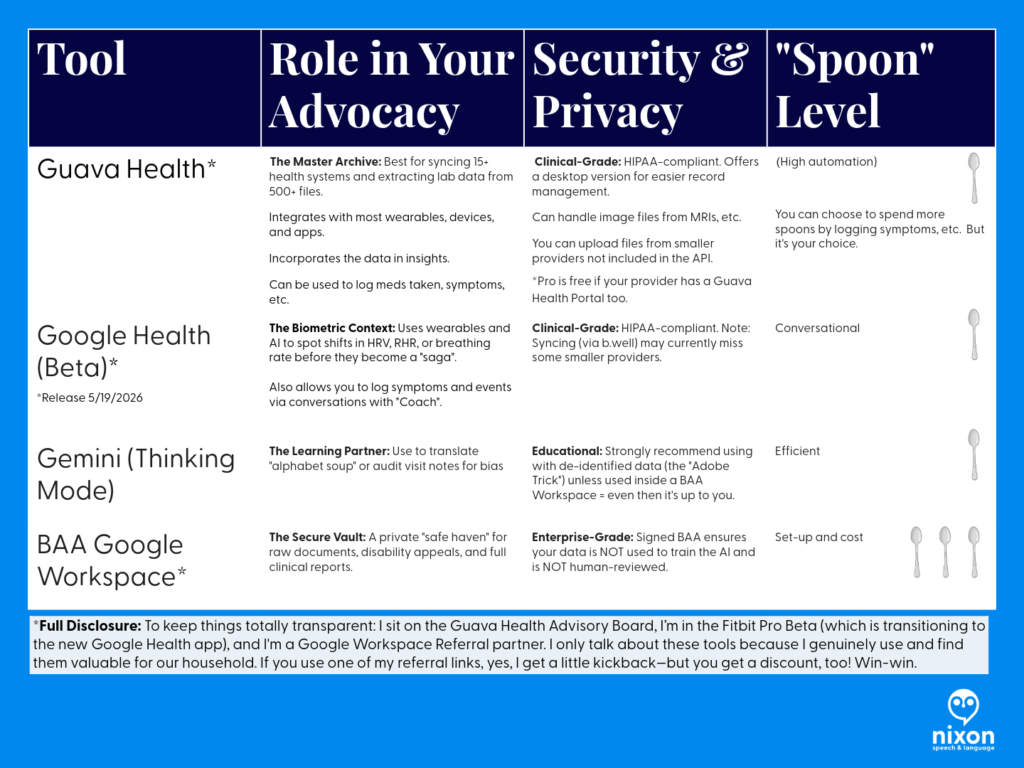
    Summary table of healthcare consumer technology, data privacy risks, and biomarker tracking tools.

    Strategy Summary

    • Audit for Bias: Use Gemini (Thinking Mode) to help you objectively spot if a note describes your personality instead of your physiology.
    • Externalize Your Memory: Use Guava’s Body Map and Medication Tracker to replace the high-stress “spotlight” of trying to remember 32 medications during a 15-minute visit.
    • Provide the Receipts: Use your multi-year biometric trends (Heart Rate, HRV, etc.) to prove that your symptoms are a significant shift from your baseline, not “health anxiety”.
    • Protect Your Privacy: If you are managing sensitive documents like disability appeals or vocational reports, move them into a Google Workspace with a BAA for maximum protection.
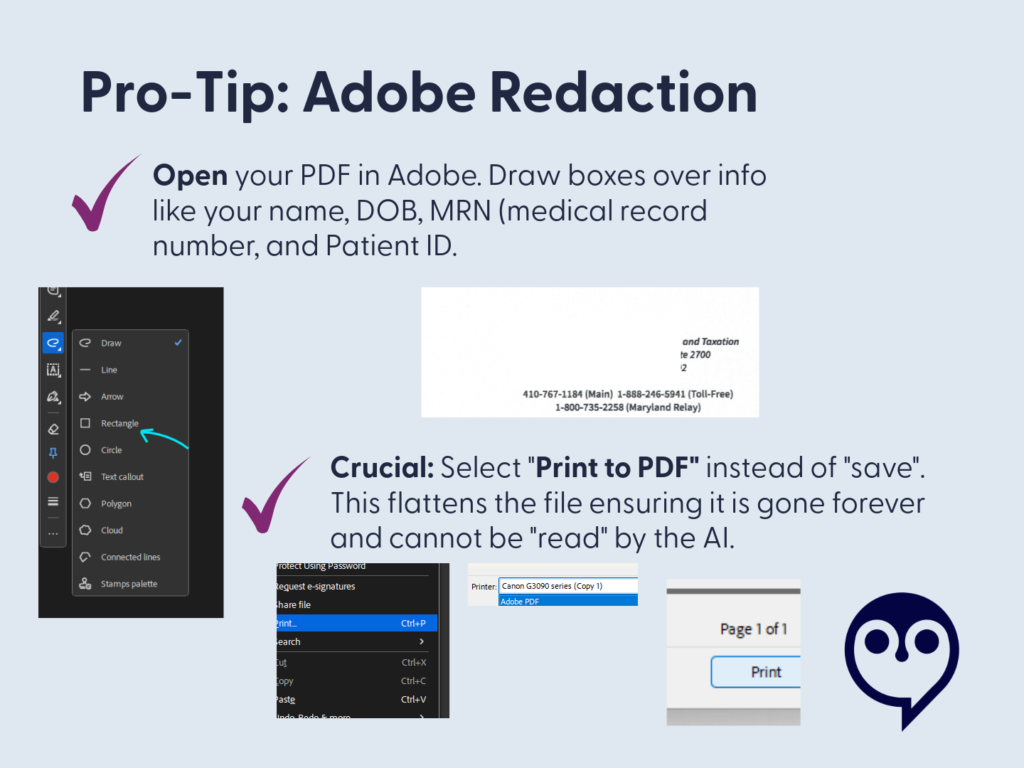
    Pro-tip about redacting text within Adobe
    How to redact documents within Adobe

    Why This Tech Matters

    Using these tools isn’t about obsessing over every data point; it’s about Spoon Management. When you have a complex history—like Ulcerative Pancolitis or Gastrointestinal Dysmotility—you shouldn’t be expected to be your own medical librarian. These tools turn the “deranged Twitter feed” of a medical record into a searchable database that you control.

    Here’s how how I go about it

    1. Access Your Notes (Medical Records)

    Under the Cures Act, you have the right to see your clinical notes.⁹ Don’t just read the summary; get the Progress Notes. 

    Tips: Sign up for the patient portal. 

    Use the summary like a snapshot.  It’s the outline to the Progress Note (usually).  But, often it just lists your current medications or the appointments to schedule, etc. 

    2. Create an “AI Buffer” (Protect Your Spoons)

    Medical advocacy is exhausting. When a note feels like a “gut punch,” don’t waste your limited energy (“spoons”) manually looking up every term.

    • The Strategy: Use an AI tool to objectively “audit” the note. Ask: “Does this note focus on my health or my personality?” (If it focuses on your personality – ask yourself if that is the provider’s role in your care.)

    * The Privacy Choice: If you use an AI like Gemini, consider a Google Workspace with a BAA.11 This ensures your data isn’t used to train public models and isn’t reviewed by humans. It’s your “Safe Haven” for medical records. (I’ll talk more about this in another post – but I want to be sure you understand those risks.)

    If you’re thinking about setting up Google Workspace for yourself, keep an eye out for my upcoming post on how I’m using it to manage our household! I’ll be sharing a deep dive, and as a member of the Google Workspace Referral Program, I’ll share some information and discount links – we will both be rewarded. <3

    • Accuracy Tip: Always use “Thinking” or “Pro” mode for medical analysis. “Fast” modes can miss the technical nuances you need for an appeal.12

    3. Use Technology to “Translate” and “Talk”

    If you struggle with dense text due to dyslexia, a stroke, or a learning disability, use these apps to hear your data:

    • Guava Guardian (Beta): A personal health detective. It can voice-alert you to a “split chart” (duplicate records) and helps you see how symptoms like hoarseness correlate with objective biometrics like HRV.
    • Google Health Coach Pro (Coming May 19): This multimodal tool allows you to talk to your data. Instead of squinting at a screen, ask the Coach to “summarize my last labs in plain English.”

    4. Request a Correction

    If you see something inaccurate or stigmatizing, say something.There are several paths and each depends on your comfort level with the provider.  

    I’ve used emails, faxes, portal messages, and phone calls to navigate these issues.  In the portal, be aware that other providers in that system can likely see your messages. (I didn’t know this.)

    How to start: 

    • Contact the provider directly via the patient portal to request the correction/clarification: “I was reviewing my visit note from [Date] and noticed the history doesn’t match the objective data from my specialist. I’ve attached the relevant lab results and cultures to help clarify the timeline. Could we update the record to reflect these physical findings accurately?” 
    • Contact the hospital’s Medical Records or Patient Advocacy department and ask about the amendment process.
    • For small practices, there is still a path for requesting corrections – this is your right to request it and there must be a path provided to you in that LONG HIPAA statement you received. Ask.

    Phrases you can use:

    • “I read my note and this wording does not reflect what happened.”
    • “Can we focus the record on the objective lab findings from that visit?”
    • “I would like to add an addendum to reflect the functional impact of my symptoms.”

    I’ll go into this further in a separate post.  I don’t want to tell you it will always work out.  But I do want you to know this is your right. And I understand it isn’t as easy as I said just now. 


    The Bottom Line

    Your medical chart should describe your health. It should not turn one provider’s opinion into your permanent identity. If you feel like your chart describes a stranger instead of you, you are not wrong to question it.


    References

    1. Sloan, M., Naughton, F., Harwood, R., Lever, E., D’Cruz, D., Sutton, S., Walia, C., Howard, P., & Gordon, C. (2020). Is it me? The impact of patient-physician interactions on lupus patients’ psychological well-being, cognition and health-care-seeking behaviour. Rheumatology Advances in Practice, 4(2), rkaa037. https://doi.org/10.1093/rap/rkaa037 
    2. Sloan, M., Bosley, M., Gordon, C., et al. (2025). “‘I still can’t forget those words’: mixed methods study of the persisting impact on patients reporting psychosomatic and psychiatric misdiagnoses.” Rheumatology. doi: 10.1093/rheumatology/keaf115. PMID: 40037287; PMCID: PMC12107051
    3. Davis, B. (2021). “Derogatory Language in Charting: The Domino Effect.” Patient Safety Network. https://patientsafetyj.com/article/73542-derogatory-language-in-charting-the-domino-effect 
    4. Goddu, A. P., O’Conor, K. J., Lanzkron, S., et al. (2018). “Do Words Matter? Stigmatizing Language and the Transmission of Bias in the Medical Record.” Journal of General Internal Medicine, 33(5), 685–691. doi: 10.1007/s11606-018-4583-7. PMID: 29374357; PMCID: PMC5910343.
    5. Park, J., Saha, S., Chee, B., Taylor, J., & Beach, M. C. (2021). “Physician Use of Stigmatizing Language in Patient Medical Records.” JAMA Network Open, 4(7), e2117052. doi:10.1001/jamanetworkopen.2021.17052 
    6. Barcelona, V., Scharp, D., Idnay, B. R., et al. (2024). “Identifying stigmatizing language in clinical documentation: A scoping review of emerging literature.” PLOS ONE, 19(6). doi: 10.1371/journal.pone.0303653. PMID: 38941299; PMCID: PMC11213326
    7. Silverman, K. (2023). “Improving Health Equity by Eliminating Biased and Stigmatizing Language in Medical Notes.” Center for Health Care Strategies.
    8. CRICO (2021). “Cures Act Overview”. https://www.rmf.harvard.edu/Risk-Prevention-and-Education/Article-Catalog-Page/Articles/2021/Cures-Act-Overview 
    9. Pandita, D., Johnson, D., & Bledsoe, T. A. “Lab Results Reporting, Ethics, and the 21st Century Cures Act Rule on Information Blocking.” ACP Ethics Case Study Series. https://www.acponline.org/clinical-information/medical-ethics-and-professionalism/ethics-case-studies-education-resources/lab-results-reporting-ethics-and-the-21st-century-cures-act-rule-on-information-blocking 
    10. HHS.gov (2025). Your Medical Records. https://www.hhs.gov/hipaa/for-individuals/medical-records/index.html 
    11. Google Workspace (2026). “Gemini for Workspace: Enterprise Privacy and Model Training Standards.” https://knowledge.workspace.google.com/admin/gemini/generative-ai-in-google-workspace-privacy-hub 

    Access and advocacy, Bias, chronic illness, clinical documentation bias, Clinician Associated Patient Trauma, empower patients, patient advocacy in healthcare, Words have Weight