Tag: health insurance

“Patient’s Log”: Track your Insurance Calls Like a Provider (In 60 seconds)

Stop scribbling on scrap paper. Here is the exact system I use to hold insurance companies accountable (and keep track of what has been said).

In my last post, I talked about the importance of documenting every single interaction with your insurance company. But let’s be honest: when you are managing a chronic illness, working, or just living life, finding a notebook and a working pen while on hold is just one more hurdle.

My husband and I realized early on that we needed a system that was fast, shared, and impossible to lose.

Our solution? A simple Google Form.

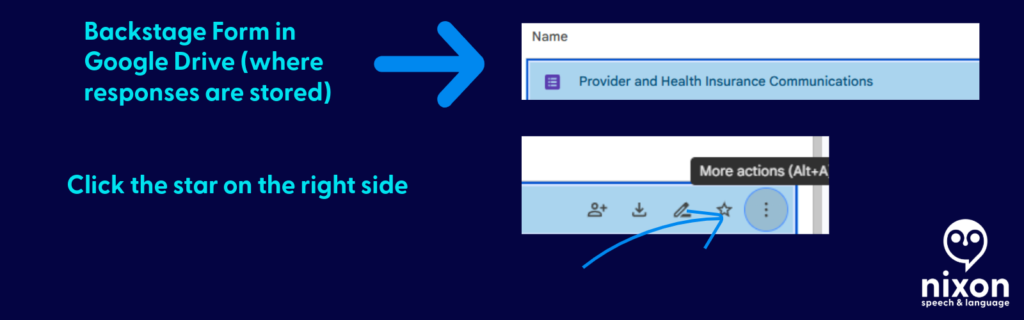
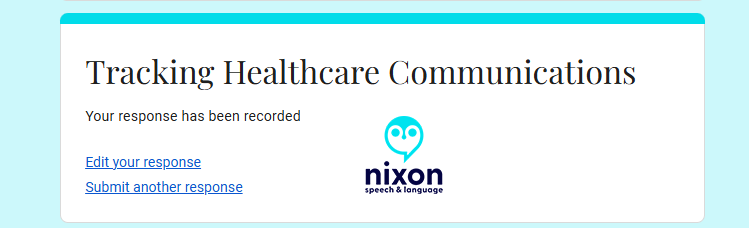
It lives as an icon on our phone home screens. When we get on a call, we tap it, fill in the blanks while we talk, and hit submit. It automatically saves everything into a spreadsheet that we can search later.

Why This Works Better Than a Notebook

  1. It Prompts You: You never forget to ask “Who am I speaking with?” because the form requires you to type it in.
  2. It’s Collaborative: If my husband takes a call, I can see the notes instantly on my computer. No more “Did you call them?” arguments.
  3. It Creates a Timeline: When you need to file a grievance (like I did), you just open the spreadsheet and copy-paste the entire history.

The Fields You Need (Steal My Form)

I created a free Google Form with these specific questions. You can copy this exact structure:

  • Patient calling about: (Checkbox: … Names of those in the household, etc.)
  • Date called: (Date picker)
  • Who contacted? (Checkboxes: Benefits, Care Management, CVS Caremark, HR, etc.)
  • Method of contact: (Checkboxes: Phone, Email, Secure Message)
  • Did I record the call? (Yes/No – Check your local laws as many areas require you to ask permission to record.)
    • My Script: “I need to record this call so I have a record of what to do next. Do I have your permission to record?” Note. Be sure to note this to any new call participants.
    • Note: If they say “No,” I immediately ask: “Since you are recording this for quality assurance, can I request a copy of that recording for my records?” (This usually changes the tone of the conversation!)
  • Name of representative: (Crucial! Always ask for this first)
  • Reason for call: (e.g., Prior Authorization, Billing Error, Benefits Question)
  • Summary of call: (What did they say? What did you say?)
  • How long were you on the call? (This is important evidence for complaints)
  • Action items: (What did the representative promise to do? What do you need to do?)
  • Follow-up date: (When should you check back?)
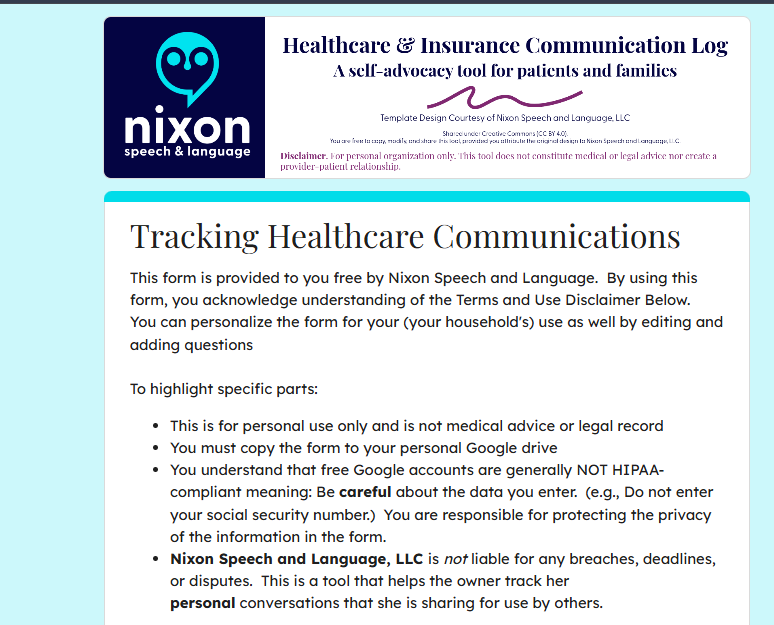
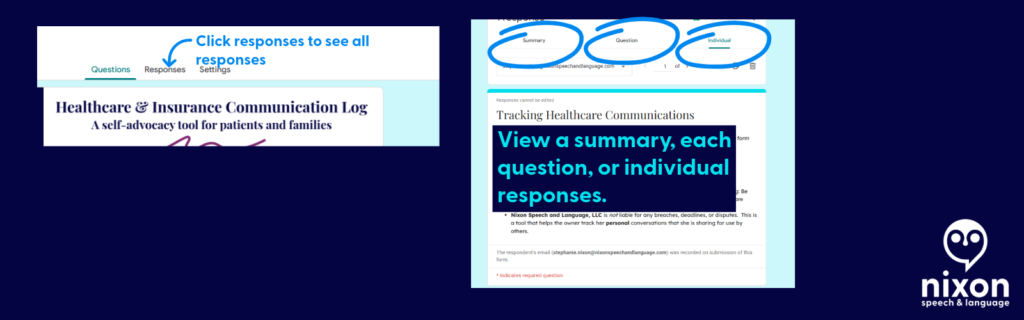
Header for your form.
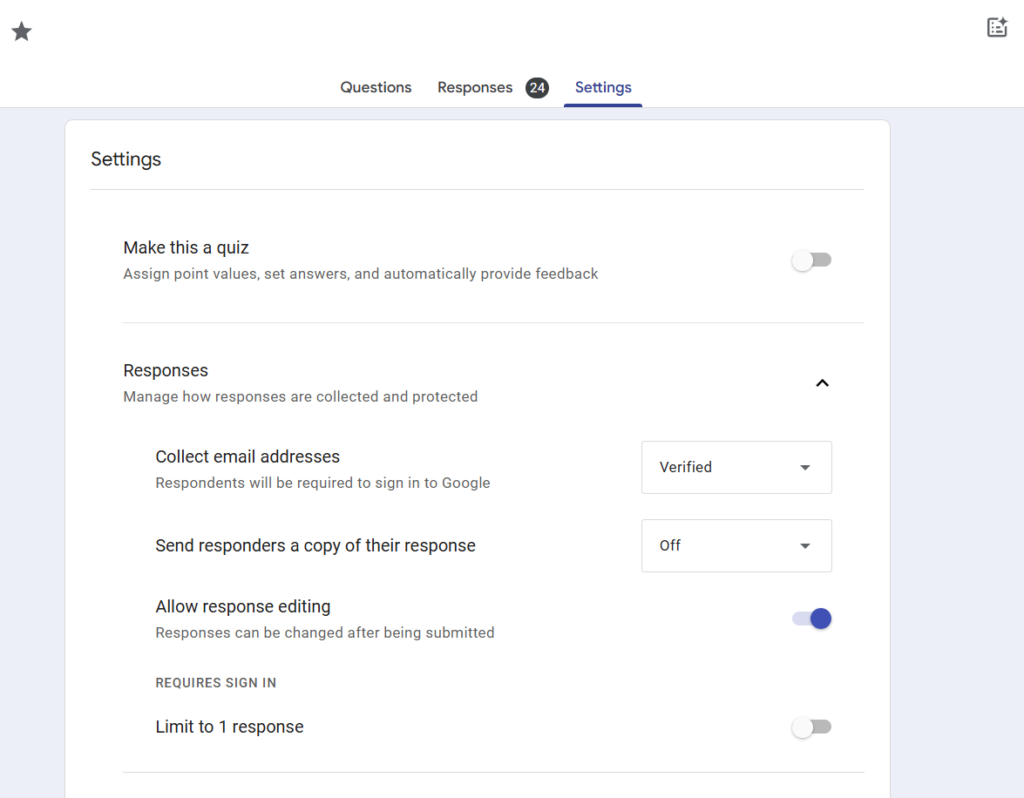
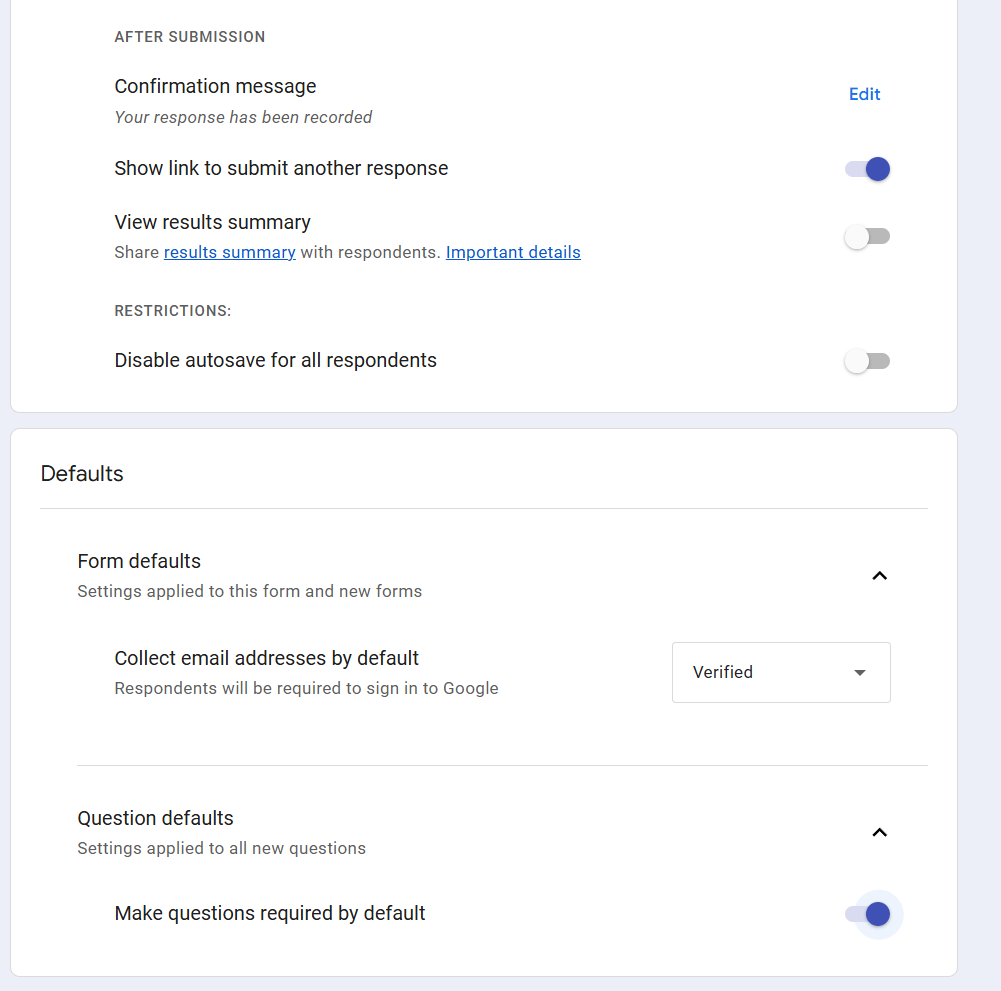
Settings for the form. Some are personal, but this let’s me and Josh know who entered the data.
I have the email addresses required by default and the same for questions. (You can set some as not required.)

How to Set It Up

  1. Go to forms.google.com and click “Blank Form.”
  2. Add the questions listed above.
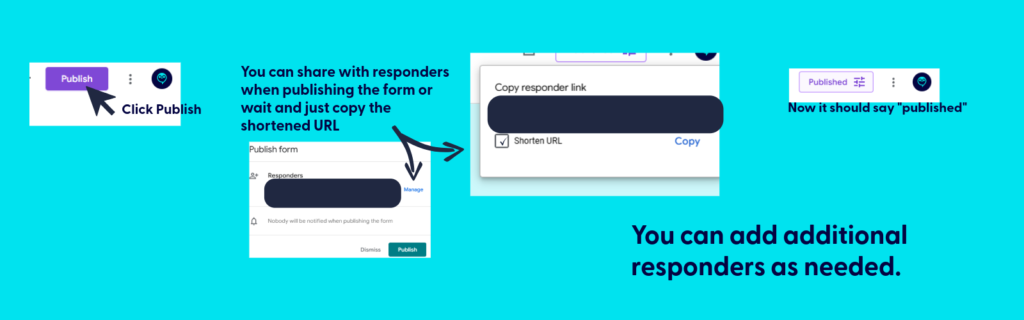
  3. Click “Send,” copy the link, and email it to yourself and your spouse/caregiver.
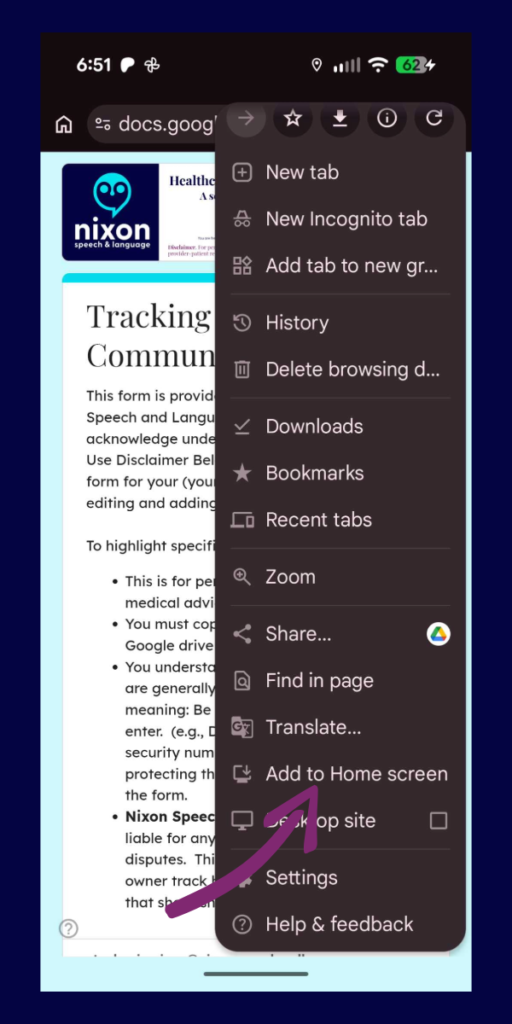
  4. Pro Tip: Open the link on your phone, tap “Share” (iOS) or the menu dots (Android), and select “Add to Home Screen.” Now it looks and acts just like an app.

The Result

When my pharmacy billing nightmare happened, I didn’t have to rely on my foggy memory. I opened my spreadsheet and saw exactly who disconnected on me on January 29th, and exactly what “Curtis” told me on February 6th.

That data wasn’t just notes; it was evidence. And evidence is the only thing that wins insurance appeals.

Disclaimer: I am a Speech-Language Pathologist and person with chronic illness, not an insurance broker or attorney. This post shares my personal experience and is not intended as legal or financial advice.

When $60 Becomes $800: How to Catch (and Fix) Health Insurance Errors

A real-life lesson in why you must audit your Explanation of Benefits.

We often assume that when the pharmacist rings up a total, or when a medical bill arrives in the mail, the number is correct. We assume the insurance computer “knows” our plan.

But we also know that the insurance computer (and even the claims processors) have a history of applying the plan incorrectly (or inconsistently).

In January I had accepted that the “computer” knew our new plan for our prescriptions —and it nearly cost my family over $1,300 in a single month.

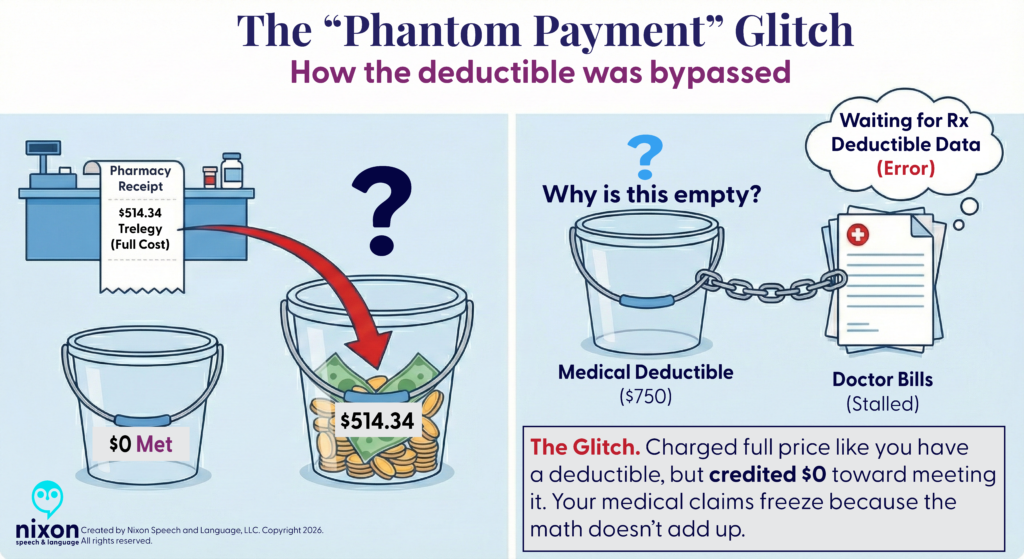
Image created by Nixon Speech and Language, LLC using Adobe Firefly AI.

From Advocate to Patient

For years, I essentially worked two jobs. By day, I was a Speech-Language Pathologist working full-time. By night, I often spent three hours at a time, multiple nights a week, on the phone with insurance companies fighting for my own coverage. I learned early on that whether you are an educator advocating for a student, provider advocating for a patient, or a patient advocating for yourself, the system will often default to “No” unless you prove otherwise.

Now, living with chronic illness and on long-term disability, I no longer have that kind of energy to spare. My “work” today is largely just managing my own health. So when a computer glitch recently caused our pharmacy bills to skyrocket, it wasn’t just a financial error—it was a drain on the limited energy I have to survive.

I’m sharing this story not just as a professional who knows the paperwork, but as a patient who knows the exhaustion. I want to help you catch these errors quickly so you don’t have to spend your evenings fighting for the coverage you’ve already paid for.


The “Glitch”: When the Math Doesn’t Math

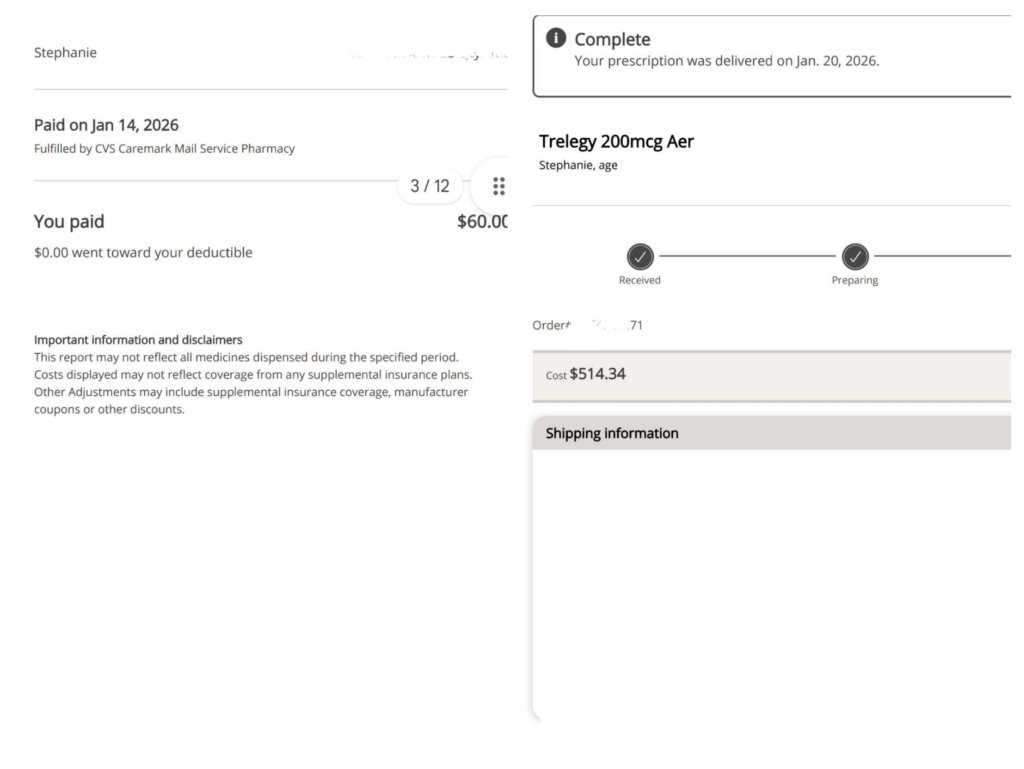
The “Glitch”: When the Math Doesn’t Math The situation started simply enough: My husband went to pick up a routine prescription. Instead of his usual $60 copay, he was charged $807.

The explanation from the pharmacy? “You haven’t met your deductible yet.”

That sounded plausible. It was January, the start of a new plan year. But when I logged into my portal, I saw something even stranger.

I had paid over $1,000 for medications in January, but my “Deductible Met” counter was sitting at $0.

Where did the money go? The system had bypassed the deductible entirely and applied the cash directly to my “Max Out-of-Pocket” limit.

  • The Error: They were charging me full price (as if I had a deductible), but refusing to credit my deductible bucket.
  • The Result: I was on track to pay thousands of dollars out-of-pocket without ever technically “meeting” my deductible. It was a phantom charge that left me with the worst of both worlds: high costs and no progress toward my coverage limits.
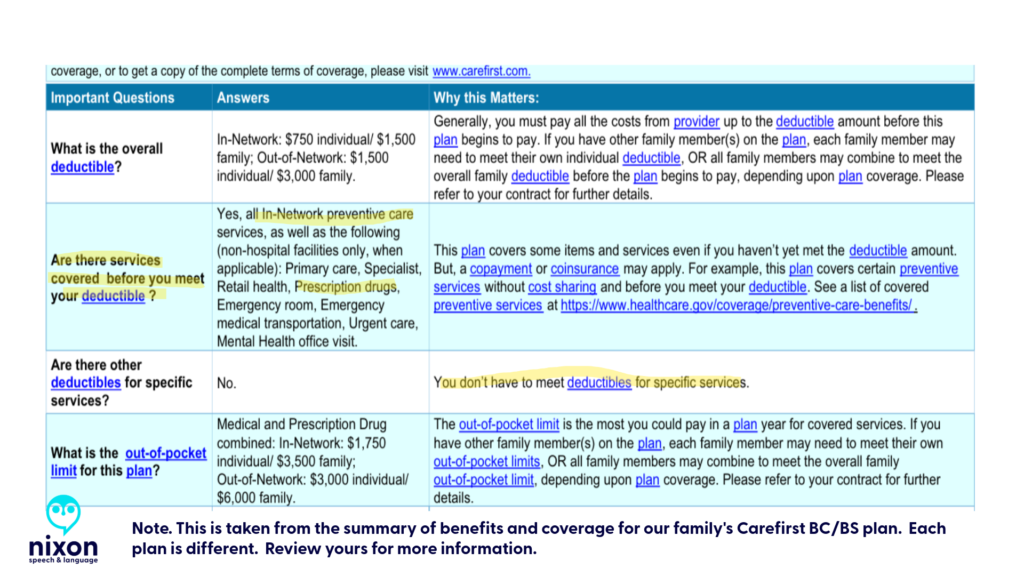
This is what an error looks like. My plan has a $0 pharmacy deductible, yet the system charged me over $500.

The Domino Effect: Why You Can’t Just “Let It Slide”

You might be tempted to just pay the overcharge to avoid the hassle. I understand that urge completely. But here is the trap: Insurance systems use something called an “accumulator.” It tracks how much you’ve paid toward your deductible.

If you pay a deductible that you don’t actually owe, the system “learns” the wrong information. Later, when you see a doctor or go to the hospital, their claims might get stuck or rejected because the math doesn’t add up. By fixing this one pharmacy error, I wasn’t just saving money on a prescription—I was unblocking thousands of dollars in medical claims that were stalled in the system.

The Hidden Trap: When the pharmacy system sends the wrong data to the medical system, it freezes your processing medical bills.

Red Flags: How to Spot an Error

Unfortunately, we had already paid for the medications. Although the error was corrected in the “Carefirst” and Caremark.com com systems as of February 2, 2026 (excepting my order receipts), we did not receive a refund or even notification that a refund was due.

In fact, after speaking with several representatives this week it seems the “correction” was backdated; however, neither Caremark nor the local pharmacy where we bough a medication were told we were owed refunds. Our local pharmacy credited us the money for their end, now I am trying to get a refund from Caremark.

Here is how to know if you should question a charge:

  1. The “Deductible” Surprise: If you have a PPO or HMO, your prescriptions usually have flat copays (e.g., $15, $30, $60) that apply immediately. If you see the word “Deductible” on a pharmacy receipt, check your plan design.
  2. The “Phantom Payment”: Check your insurance portal after a big purchase. If you paid $500 at the pharmacy, your “Deductible Remaining” should drop by $500. If the money disappears into the ether (or only hits your “Out-of-Pocket Max”), the system is miscoded.
  3. The “Processing” Limbo: If your medical claims (doctor visits) are sitting in “Processing” for weeks, it often means the medical system is waiting for the pharmacy system to send data that—thanks to this glitch—will never arrive.
The plan thought we were in a different plan type offered by my husband’s group, a CDHP plan, but we are in the plan above.

Strategy: Write First, Call Second

The Reality: Phone calls are exhausting. But sometimes, secure messages result in frustrating, boilerplate responses that don’t answer your question. (I received a generic reply about “brand name drugs” that had nothing to do with my actual billing error!)

My advice: Even if you know you’ll have to call, send a Secure Message first.

  1. It creates a legal timestamp. Even if their reply is useless, you have proof that you reported the error on “Date X.” They can no longer say, “We have no record of that issue.”
  2. It forces a written response. When you finally do get a human on the phone, you can cut the small talk: “Please open Case #12345. I have already submitted the details in writing.”
  3. It respects your energy. If you have to file a formal legal grievance later, showing that they ignored your clear written explanation makes your case much stronger.
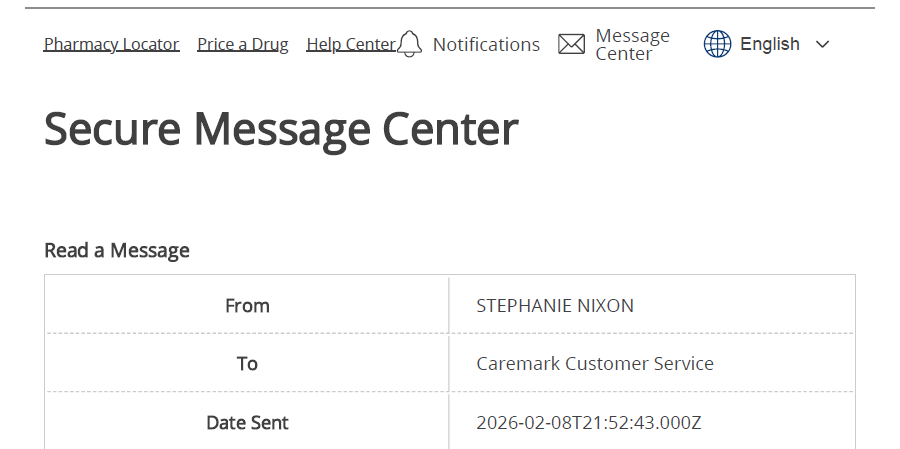
In my Caremark secure message center. There is also one for your health insurance company.

Pro-Tip: Document Like a Clinician

When you are dealing with brain fog or fatigue, relying on memory is risky. I treat every insurance interaction like a patient case note.

  • Log Everything: Date, Time, and the Representative’s Name.
  • Ask for the Reference Number: Every call has a “Case ID.” Ask for it immediately.
  • The “30-Day” Clock: If they say they will “review it,” mark your calendar for exactly 30 days later. If they haven’t fixed it, they may owe you interest.
  • See my post on creating a “patient’s log” that may help you track who said/did what (and when)

The Magic Words to Use

If you do have to speak to someone, use these terms to get past the front-line script:

  • “Plan Design Error”: This tells them the computer is set up wrong for your specific group.
  • “Adjudication Breakdown”: This asks for the math behind the price (e.g., how much was copay vs. deductible).
  • “Accumulator Adjustment”: This asks them to fix your deductible history so future claims process correctly.
  • “Senior team”: If you have already worked with the senior team on your issue, then explain the time it has taken and ask for the appropriate representative

The Takeaway

It took weeks of persistence, but we finally got a break. A representative worked with our local pharmacy on one claim and we were refunded for the discrepancy that was initially erroneously classified “deductible” ($747 of the $807.07 prescription cost). The call was disconnected before he could let me know how he was managing the issue with the Caremark pharmacy payments, but we have the proof we need to win.

I spent years advocating for others. Now, I’m learning that the most important advocacy is often the kind we do for ourselves—quietly, methodically, and with the receipts to prove it.

Disclaimer: I am a Speech-Language Pathologist and educational consultant, not an insurance broker or attorney. This post shares my personal experience and is not intended as legal or financial advice. Always consult your specific plan documents for coverage details.

Access and advocacy active listening andoid Autism childhood apraxia of speech chronic illness claims processing Communication communication log deductible Department of Education diagnoses Discord doge Dyslexia dyslexia emoji dyslexia symbol education emoji errors processing claims google health insurance health insurance mistakes health unknowns Independent Funding innovation Institute of Education Sciences iPhone Kanban Task Tracker learning disabilities max out of pocket National Institutes of Health navigating healthcare NIH Organizer petition pharmacy benefit managers Planner pqbd.org research research design Research Funding speech-language pathology Speech and language disorders Systematic Research

Health insurance claim denials and downcodes: What can I do?

Note. I’m writing this mostly from a patient perspective, but it can be used by practitioners to understand the process and empower patients.

What is a health insurance denial?

A denial is when the health insurance refuses to pay for a medical service or treatment that has been provided or requested.

Some reasons health insurance processors give for claim denials:

  • A service isn’t covered by the plan
  • A service is said to be “not medically necessary”
  • A plan only covers “in-network” providers
  • Maximum plan coverage has been reached
  • Filing error
  • Coding or billing error

Prior authorization for a medical service (e.g., speech-language evaluation, MRI, etc.) is different than a medical claim.

  • A medical claim is a bill that your provider sends to your health insurer for your medical care (or if “out-of-network”, a claim you send to your health insurer). (This claim includes codes called CPT codes – or procedure codes – associated with the costs.)
  • A prior authorization (also called precertification) is when your health plan requires patients to get approval for a medical service or medication before they receive the care. Information from your chart must be submitted from your chart by your practitioner (and sometimes by you). (I will address PAs more in a later post.)

When I refer to denial in this post, it means denial of a code on a medical bill or denial of a prior authorization request.

But remember there is a difference. And you can sometimes prevent medical claim denial by confirming whether precertification or prior authorization is needed for a medical service.

For a medical claim, the medical service was already completed and the bill was filed with insurance. You could be stuck with the balance when there is a denial.

For a prior authorization, the provider is requesting that your health insurance company agree to pay for a medical service. The service has not been completed.

Note. As an SLP, a frequent reason that I saw claim denials and prior authorization denials by private health insurance companies for a child’s speech-language therapy services was the plan did not include “habilitative” services OR only included them for autism spectrum disorder. i.e., “This service is only covered in cases of accident, injury, stroke, or autism spectrum disorder”.

What I do. I often call to confirm coverage of any services I am going to receive (or when I was providing services to patients. I ask these questions: Are there any exclusions? Do I need prior authorization? If the answer is yes to either or both, I ask for additional information about these. I take notes. I write down the date, time, and name of the person on the phone. I put that information where I won’t lose it. (Take a picture, put it in the notes app on your phone, anything.)

What is downcoding during claims processing?

The health insurance company changes a higher-level CPT (i.e., procedure) code (e.g., CPT 99214 indicating moderate complexity over 30 minutes) to a lower-level CPT code (e.g., 99213 indicating low complexity 20 minutes).

No matter in- or out-of-network it results in lower reimbursement as the lower code is associated with a lower payment amount.

An example from one of my out-of-network claims where my health insurance company used downcoding for a CPT code.

Column A = Billed Amount
Column B = Member Rate (nothing there because this is out-of-network)
Column C = Not payable by plan
Column D = Applied to deductible (I hit my out-of-network deductible early this year.)
Column E = My copay (does not apply to out-of-network)
Column F = Remaining amount (Amount billed – Notpayable)
Column G = Plan’s share (For me, this was 75% of the amount they deemed appropriate after downcoding)
Column H = My coinsurance (For me, this was 25% of the amount they deemed appropriate after downcoding)
Column I = My total share (Coinsurance + Not payable by plan)

You (and your practitioner if they are in-network) must watch your explanation of benefits for downcoding. This isn’t something they will tell you with a phone call or an email. It appears with those numbers referencing the reason which is at the bottom of the bill.

So if you see those numbers, look for a reason. If you are struggling to read the explanation of benefits, then ask a biller at your hospital, the specialist, or you could even email me.

Health insurance companies will say they do this to prevent upcoding by practitioners (which is fraud).

What do I do now?

  • Review the denial notification (These are not easy to understand for anyone – even some doctors can’t read an Explanation of Benefits. Ask for help from your provider, insurance company, a friend, me, anyone, if it’s confusing)
  • Contact your provider
  • Contact your insurance company.
    • Ask them why
    • Ask what can be done to correct the claim
    • Sometimes it is a simple processing error. (Once my annual woman’s exam was processed by my health insurance as if my husband was the patient, despite this clearly being inaccurate. It was reprocessed correctly without an appeal)
    • Other times the doctor didn’t provide enough information, or the insurance company needs to see case notes.
  • Gather the documents you need (medical records, test results, practitioner notes)
  • File the internal appeal: This information is on the explanation of benefits, and sometimes you can do this through your health insurance online portal.
    • If you need to fax the appeal, then keep a copy of the sent receipt. (I use e-fax.)
    • If you need to snail mail the appeal, then note the date and time you sent it or even send it certified mail return receipt. (I say this after having my private insurance claiming they did not receive documents multiple times.)
  • Learn about the appeal process:
    • DEADLINES are important (set calendar reminders, whatever you need to follow-up on these)
    • Know what to do next if the appeal is denied: Sometimes you file an external appeal, sometimes you have another level of internal appeal
  • If you are struggling with the process, then contact your State’s Insurance Department (often there is a regulatory body like an insurance bureau and a group that helps navigate appeals)

Only some people file appeals – know your rights.

Gupta, Collins, Roy, and Masitha (2024) used information from a survey by SSRS that included work-aged insured US adults from April 18 through July 31, 2023 to look at insurance denials and appeals. Of the adults they reviewed, 45% of insured working-aged adults were charged for a medical bill or copay for services they though should be covered by health insurance. They noted the following in a Commonwealth Fund publication

  • Less than half of the 45% who reported the errors challenged the errors. Why? The most reported reason said they didn’t know they had the right to challenge a medical bill.
  • About 2 of 5 who challenged (i.e., appealed) their bill, reported it was reduced or eliminated by the insurance company.
  • 17% reported that their insurer denied coverage for care recommended by their doctor; more than half said neither they nor their doctor challenged the denial
  • About 6 of 10 adults who experienced a coverage denial also experienced delayed care

There are many issues cited in this report including how complexity of US health insurance has affected patients. These patients may struggle to understand what is and what isn’t covered and their financial liabilities.

Personally, even selecting a health plan each year is complicated by terms like the following:

  • HMO
  • PPO (but some of these are really HMOs pretending to be PPOs)
  • POS (point of service)
  • In-network deductible
  • Out-of-network deductible
  • In-network max out of pocket
  • Out-of-network max out of pocket
  • Wait! There’s more! Then you have 105% of the maximum allowed medicare rate for out-of-network
  • Then how much of the out-of-network bills go toward your deductibles? Does all that go toward the max out of pocket out-of-network? (You’d be surprised.)
  • Does the coverage change based on the service? (Yes.)
  • Do they change coverage based on the service provider? (i.e., facility vs. clinic)
  • Are there a maximum visits?
  • With my insurance cover allied health services (i.e., speech-language pathology, physical therapy, and occupational therapy)? How many visits per year? Are these capped individually or across services? Copay? Are there exclusions?

The list goes on…

What can I do if I lose the appeal at all the levels available?

If your plan is through your (or your spouse’s) employer: Explain the issue to HR at your company. There might be something in what they negotiated that could change the situation, or they could negotiated better benefits for the next plan year. Some employers even have support available for employees in these instances.

Advocate. You could also contact your State and Federal representatives to express your frustration regarding the situation and request a change to requirements for healthcare insurance that would prevent this from happening. This won’t take care of the current claim, but it might lead to change in the future.

Here are two TikToks from my personal experience navigating claims with my private insurer.

@omymanycats

Health insurance denials and claim mishandling are something I have experienced for years. These are merely a few. I wanted to get this out for the ABC News report that Dr. Glaucomflecken mentioned but it seems the account is gone.#healthinsurance #healthinsurancedenials #chronicillness #navigatinginsurance @Dr. Erin Nance 🇺🇸 @Dr. Rubin, MD @Dr. Glaucomflecken @ABC World News Tonight @Aaron Parnas @UnderTheDeskNews

♬ original sound – omymanycats
@omymanycats

It seems unethical for a claims processor who was not present during my medical appointment to recode CPT codes on my bills. It seems more egregious when I need to monitor them closely to ensure they reprocess the bill correctly up on me winning an appeal. And even moreso when they continue to do so after I’m told it was just human error. #healthinsurance #healthinsurancestruggles #appeal #claimprocessingerrors #chronicillness #chronicillnesstiktok #ishealthinsurancereallytheretohelp #spoonies

♬ original sound – omymanycats – omymanycats

Disclaimer. This article is based on research and personal experience. This information is not intended as legal advice or healthcare advice. This is informational and parts not from research or able to be documented in my EOBs/experience with my personal private insurance would be based on my personal opinion.

,

Leave a Reply

Your email address will not be published. Required fields are marked *

Health insurance: Disparities in Billing and Claims Processing

What is disparity? “A noticeable and usually significant difference or dissimilarity”. Think income, education, race, and ethnicity.

Individuals with disabilities (including chronic health conditions, chronic diseases) are another group that might experience health disparity, but there is less research on this group. Krahn, Walker, and Correa-De-Araujo (2014) discuss the history and definitions of disability.

Disparities across income, education, race, and ethnicity

Hoagland, Yu, and Horny (2024) examined the association between patient demographics and insurance denials for preventive care among a cohort of 1,535,181 privately insured patients seeking preventive care in the US.

What preventive care was considered in this study? Contraceptive administration, breast cancer screening, cholesterol screening, colorectal cancer screening, depression screening, diabetes screening, and wellness visits.

Here is a summary of their findings:

  • Patients with low incomes (<$30,000 yearly), high school degree or less, and from minoritized racial and ethnic groups experienced higher rates of claim denials. Most frequently these were noncovered service-diagnosis code pairs and billing errors. (What does this mean? People’s access to basic preventive care is different based on their demographic – or income, education, racial, and ethnic background. This is considered inequity)
    • Income: The lowest income group (<$30,000 yearly) had 43% higher odds of any denial than those in the highest income group (benefit denials and billing errors; statistically significant).
    • Race and Ethnicity:
      • Non-Hispanic black patients had 19% higher odds of denials compared with non-Hispanic white patients
      • Hispanic patients had 16% higher odds of denials compared with non-Hispanic white patients
      • Asian patients had 54% higher odds of denials compared with non-Hispanic white patients
    • Education: Differences were not statistically significant
  • Did practitioners resubmit bills (i.e., file the bill again) after denials?
    • 32.4% of practitioners resubmitted the claims.
    • What amount was unpaid by health insurance? The mean (average) of the unpaid denied claim was $1395. This was left to patients 92.85% of the time and varied by patient income, race, and ethnicity.
      • Low-income patients had a higher burden than high-income patients (medians of $412 vs. $365, respectively)
      • Non-Hispanic black (median $390), Hispanic (median $464), and Asian (median $522) patients each facing higher costs than non-Hispanic White patients (median $357)
      • Smaller differences between less-educated patients (median $384) compared with those who had more education (median $399)

Financial burden for those with disabilities, chronic illness, and chronic disease

Note. I struggled to find research addressing this topic as a disparity, and I know I am not including everything out there. Please share any additional information in the comments or email me.

Below is a summary of what I found.

  • Increased chronic health conditions = increased financial burden. The more chronic conditions a person has is associated with an increased financial burden (i.e., increased debt, increased medical debt in collections, and increased out-of-pocket medical costs; Becker, Scott, Moniz, Carlton, & Ayanian, 2022)
  • Medical debt = worse population health. Medical debt is associated with worse population health (i.e., more days of poor physical and mental health, loss of years of life, higher mortality rates for all; Han, Hu, & Zheng, 2024)
  • If you use health services more, then you’re more likely have a claim denied (Pollitz, Pestaina, Lopes, Wallace, & Lo, 2023)
    • Of the “high utilizers” (those with more than 10 provider visits in a year), 27% experienced a denied claim
    • Of the “moderate utilizers” (3-10 visits in a year), 21% experienced a denied claim
    • Of patients with less than 3 provider visits in a year, only 14% experienced a denied claim
  • Consequences of patients whose problems included denied claims (Pollitz, Pestaina, Lopes, Wallace, & Lo, 2023)
    • Delays receiving care/treatment (26% for those denied and 13% for those who were not)
    • Unable to receive medical care or treatment recommended by the medical provider (24% for those denied and 13% for those who were not)
    • Declined health (24% for those denied and 10% for those who were not)
    • Paid more for treatment or services than they expected to pay (55% for those denied and 16% for those who were not)
  • Pollitz, Pestaina, Lopes, Wallace, & Lo (2023) also noted the following about consumers with denied claims:
    • Most patients did not know they had appeal rights
    • Most (85%) do not file formal appeals (appeal rights vary based on coverage as do the rules; the process can be complicated)
    • Often those who need to appeal the health insurance decisions use a lot of health services, and may be too sick to advocate for themselves. (There are programs, Consumer Assistance Programs, available to help; however, they don’t exist in all states and Congress hasn’t appropriated funds since 2010.)

Han, Hu, Zheng, Shi, and Yabroff (2024) noted that policies increasing access to affordable health care could improve population health.

Keep in mind that most of this information describes associations between chronic conditions, medical visits, and financial burden. This means that the values of the variables (e.g., chronic health conditions and financial burden) provide information about each other. This doesn’t mean that more chronic health conditions causes more financial burden, BUT it does mean we can predict the financial burden more accurately when we know the number of chronic health conditions a person experiences.

But implementing such policies will take time and working with both State and Federal elected officials.

What can you do in the in the meantime?

  • Monitor your medical bills
  • Know your rights
  • Ask questions
  • If you don’t understand something your provider puts on a bill OR your insurance company has on the “Explanation of Benefits”, then ask. (You can even ask me)

But please don’t ignore the error. And I understand how exhausting this is. It isn’t easy. It’s frustrating. It is disheartening. It’s overwhelming.

Disclaimer. This post is not medical or legal advice. It is informational in nature with some information regarding the author’s opinion.

Leave a Reply

Your email address will not be published. Required fields are marked *